 JungleLife by Kat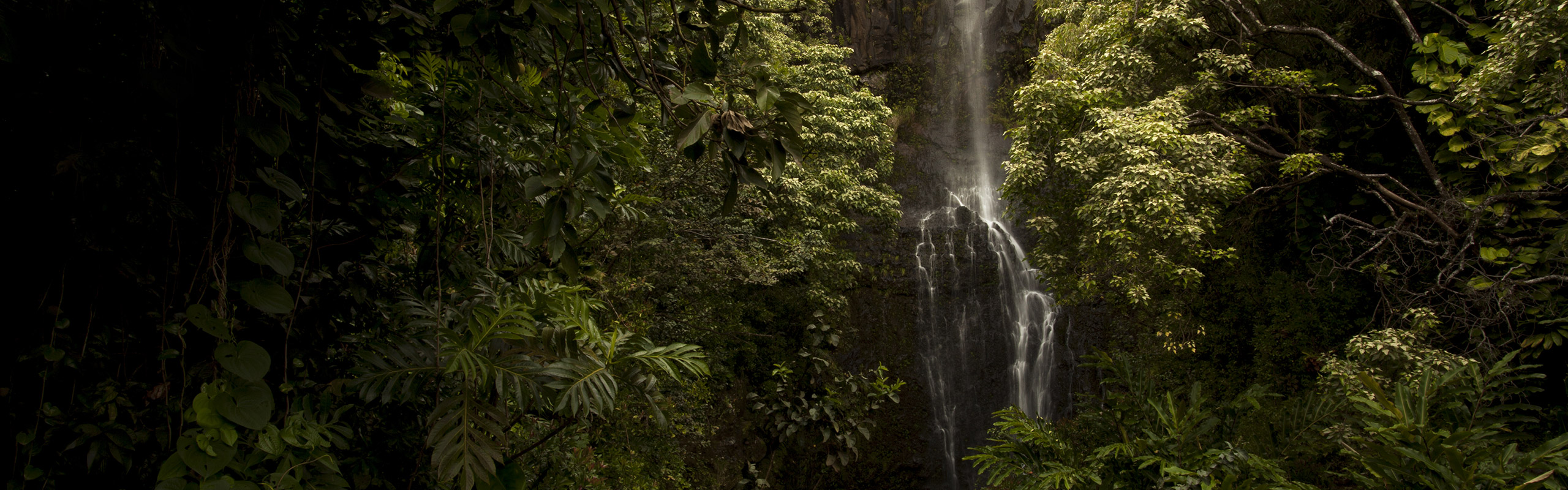
Where The Last One Walks

Sumatra, Indonesia.
Discover the critically endangered rhinoceros in Sumatra, Indonesia, a quiet forest dweller shaped by ancient landscapes and sustained through fragile coexistence.

Misty rainforest with dense foliage.
In the forests of Sumatra, Indonesia, there are places where the land feels older than memory. The air is heavy, the ground soft beneath your feet, and the paths, if they exist at all, are shaped more by movement than design.
Somewhere within this landscape, the Sumatran rhinoceros moves quietly, almost without trace.
It lives in dense rainforest, where the terrain rises and folds into steep valleys and mist-covered hills. From lowland swamps to higher ground, the forest offers both shelter and concealment. Roots twist across the earth, vegetation closes in quickly, and visibility is often limited to only a few metres ahead.
In this environment, size is not an advantage. The Sumatran rhino, smaller than its African relatives, moves with a kind of quiet efficiency. Its compact body allows it to navigate narrow paths, thick undergrowth, and uneven ground that would challenge something larger.
It is not peat alone that has shaped it, but the forest itself.
Unlike the White rhinoceros and the Black rhinoceros, which inhabit open grasslands and scrub in Africa, the Sumatran rhino is built for concealment rather than distance. Its skin is softer, more flexible, allowing it to pass through dense vegetation. A fine covering of hair catches the damp air, giving it an appearance that feels almost prehistoric, something that has remained while so much else has changed.
At around five to eight hundred kilograms, it is the smallest of the living rhinoceroses, yet in the close confines of the forest, it feels anything but small. It browses quietly on leaves, fruit, and young shoots, moving through a world where presence is often sensed rather than seen.

Rhino habitat, mud wallow.

Along riverbanks and in shaded hollows, mud wallows form cool, soft places where the rhino returns again and again. Here, it coats its skin against heat and insects, lingering in stillness before disappearing once more into the forest.
These small, hidden spaces become part of its daily rhythm.
This animals lineage stretches back more than twenty million years, making it the closest living relative to the long-extinct woolly rhinoceros. It is often described as a living fossil, though nothing about it feels still. It is not a remnant, simply one of the last.
Once, it moved across much of Southeast Asia. Now, its presence is reduced to fragments of forest where the conditions remain just right. Even here, it is rarely seen.


Local village on forest boundary.
For those who live alongside these forests, the rhino exists more as an awareness than a sighting. Its paths are known, its presence understood, but encounters are uncommon.

Coexistence here is not accidental. In some areas, communities are part of restoring what has been lost. Seedlings are grown and planted into degraded land, and forest thinned over time, slowly rebuilding the forest the rhino depends on.
There is also a quiet practicality to this relationship. Farmers grow and supply food plants such as ficus, leaves, and branches to support rhinos in managed care. Livelihoods are shifting as well, with small-scale initiatives and eco-tourism offering alternatives to ways of life that have gradually shifted.
These changes are not always visible, but they are there.
It is not a perfect balance. But it is an evolving one built not on separation, but on a shared understanding that the forest, and what moves within it, must endure.
And somewhere, beyond sight, it still does.
Editor’s Note
These stories are drawn from time spent observing landscapes, wildlife, and communities across Indonesia, shared with respect for place and those who live within it.
Kat
 JungleLifebyKat
 Luke
Luke