

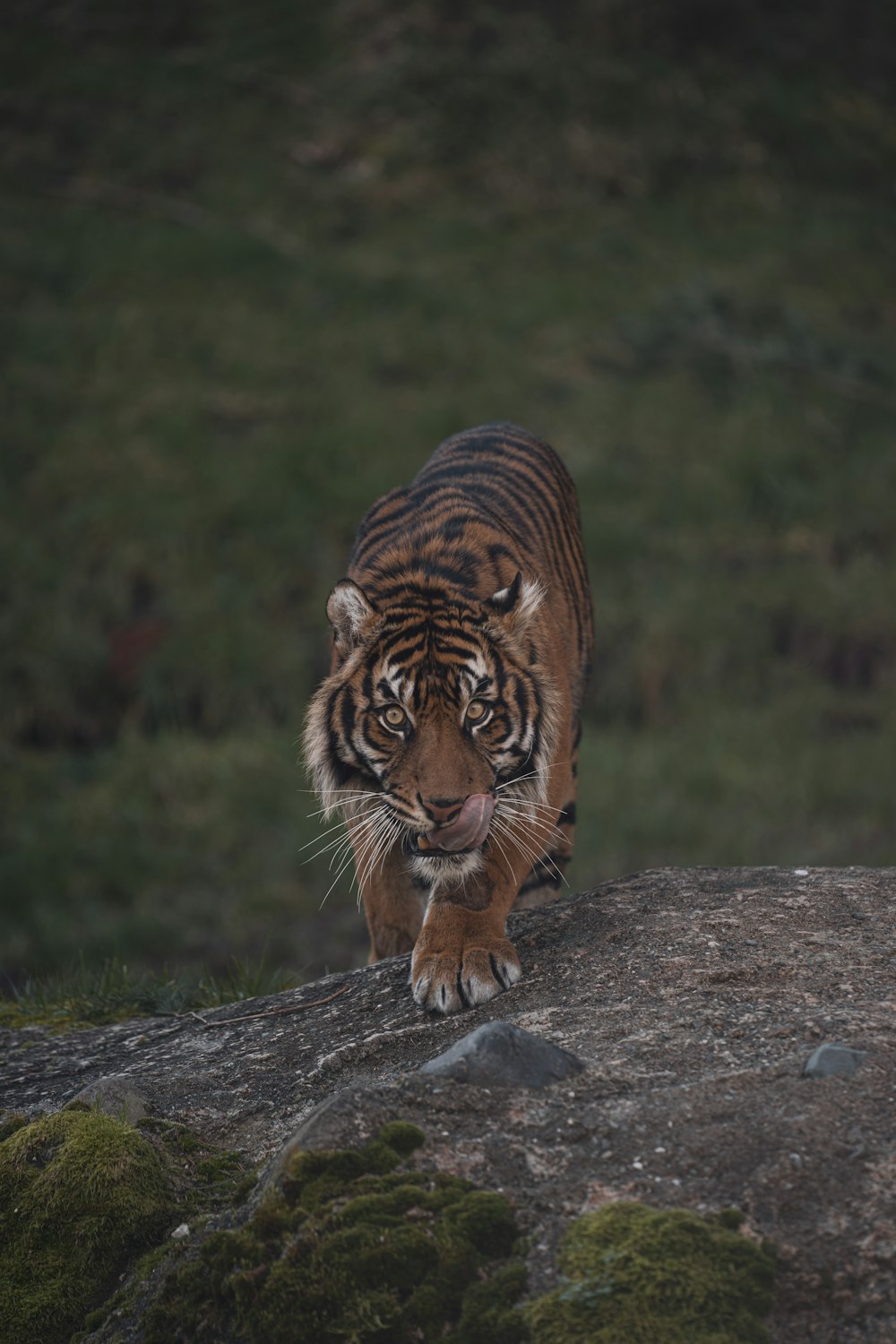
What is up with the cats’ tails? I asked a local. If you have ever been to Sumatra, one of Indonesia’s larger Islands, you would have definitely noticed, and perhaps be bemused by, the strange tails that adorn the pleasant feral cats. Some are stumpy, some curly, some crooked, some are just average, long and slender. I asked a local about the curious cat’s tails, and he shrugged and said, “They are just born that way.”

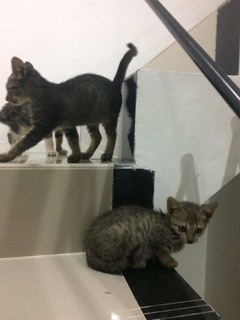

My husband and I arrived on the Island of Sumatra to do some volunteer work in a small town in the province of Riau surrounded by the jungle. I decided to go for a walk and explore the area.
Coming across a black cat, she watched me from a safe distance with her big green eyes. She was standing next to a table, and as I ventured closer, I saw three kittens, possibly a week old. She meowed at me and seemed quiet, tame for a feral cat. She obviously was used to human contact, as some food had been put there. Maybe someone had dumped her when they found that she was pregnant. I asked some other local people in the area if she belonged to anyone, but, like the last guy, they just shrugged. “Many people had cats in the town,” one of them said. As someone was obviously feeding her, I left slightly less concerned and went back to our house.
Eating a slightly spicy version of nasi goreng, a popular Indonesian fried rice dish with pieces of meat and vegetable added, at one of the local eateries, a cat sauntered by, gave me a bored look and kept going. Then it happened again with another cat. And again. These cats weren’t hungry. They seemed satisfied, well fed and content. Another strange thing was that they had stubby tails.


This town had so many feral cats and at least ninety percent of them had stubby tails. They would wander around the town, sleeping in shops, lay outside shops, on top of tables and under tables, being fed by the locals. They also survived in the Sumatran jungle. Many Indonesians believe that cats with short tails or no tails are better ratters, so they look after them.
But how did they get here? I decided to look into it. It seems that some of the cats in Indonesia and elsewhere through Asia may have descended from the Japanese bobtail breed. According to informed popular belief, most of the cats got wiped out by some poison spread by the Japanese during occupation during World War II, and so there was a rat invasion. Cats were likely imported from Japan and China. This mixed with interbreeding has increased the chances that a cat will be born with a smaller tail.

It is also believed that the small Indonesian cats are not descended from domestic cats, but small jungle felines. They are cousins of the true Siamese cats. Their bodies are narrow and flexible. The muzzles are square, and the eyes are large in proportion to the face to aid in hunting in dense foliage. The feet are very small and the back legs longer than the front. These cats are great jumpers.
I decided to go back to see if the feral cats were still where I had last seen them, which they were. The mother cat had patches of fur missing all over her body. This was obviously from surviving and hunting in the jungle. She had a slim body, pitch black fur, long thin legs, and small delicate features with big green eyes. Very much a Siamese resemblance. I would visit her every day with some food, and when I went away, I would often wonder what would happen to her and her kittens.
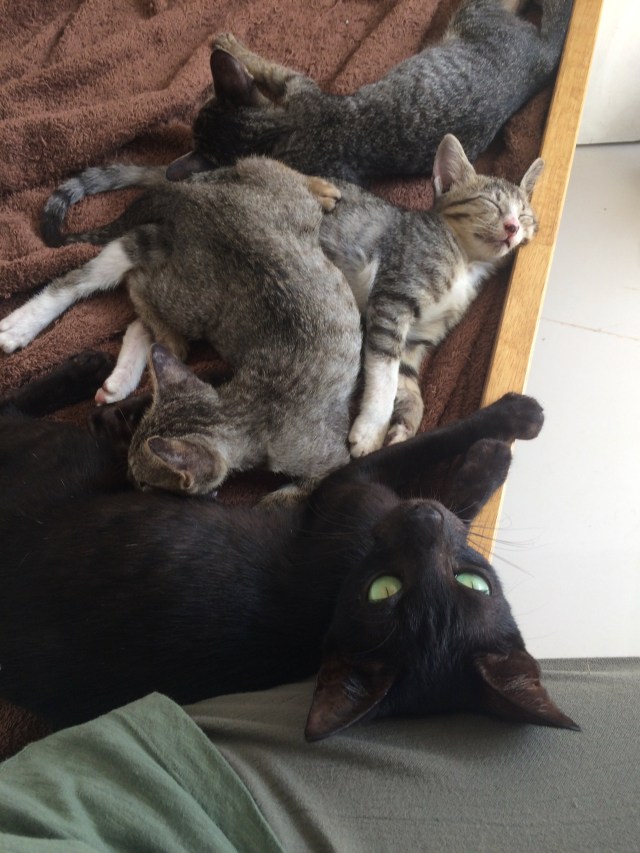
With little food and water, in very hot humid conditions, my husband and I decided to rescue her and the three kittens. We were prepared to do anything to ensure the safety and well-being of the mother cat and her kittens. We put them in the car and brought them home. I noticed the kittens all had long tails with kinks at the end. The mother cat had a stubby tail. Two of her kittens were tabbies, one, in particular, looking exactly like a little leopard cat.
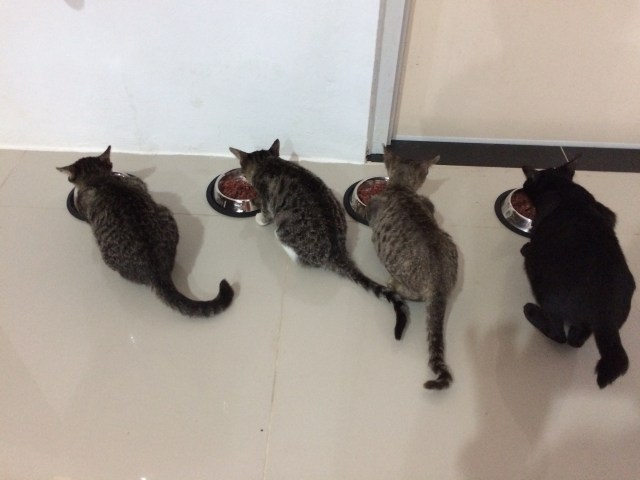
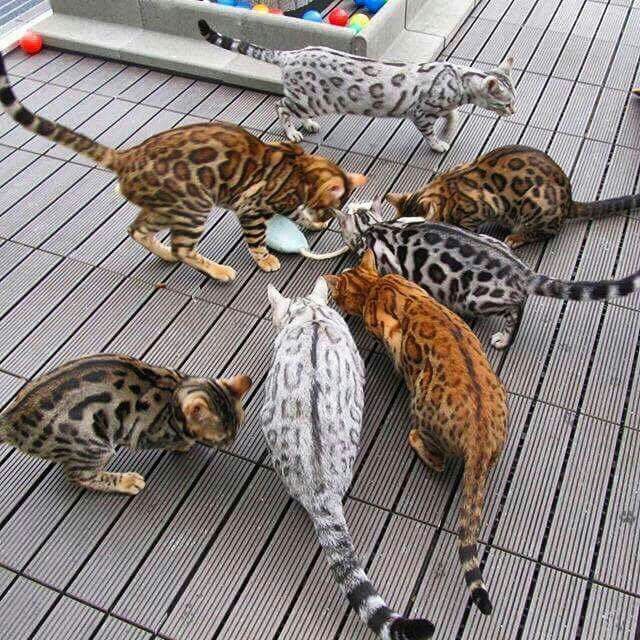
I discovered that these creatures are called Bengal cats, a crossbreed of an ordinary domestic cat with a leopard cat. They have beautiful natures and can be very affectionate, though some might find them a little aloof. Leopard cats love to catch fish, and Bengals like to play around in their water bowl. I called my two Bengal kittens Tigger and Minx. Tigger was lighter in colour and Minx much darker. Tigger was the most affectionate of the two. Minx didn’t like to be cuddled and was a little bit wild. The Bengal kittens were great furniture scratchers. The third kitten was a female with white paws, so I called her Mittens. She was gentle like her mother. Chloe lived a very rough life before she arrived at my home. She is a cat of courage and poise, with a quiet gentle nature.


The Bengal cat is one of the fastest-growing breeds in popularity of recent years. Due to its hybrid background, the Bengal has not been accepted by the largest cat registry, the Fanciers’ Association (CFA). However, the International Cat Association and the American Cat Fanciers Association (ACFA) do register this breed.
Seeing my new life through the eyes of an extraordinary feline such as Chloe, as a cat lover writing about the feral cats of Sumatra and doing all of this through the eyes of a cat is never less than perfectly endearing.


She would snuggle up to me on the couch or on the bed, and the kittens were always at my feet.
When Chloe fell pregnant again, she gave birth to six kittens in the bottom of my cupboard, all different colours and all with stubby tails. The second father was discovered to be a large white domestic cat. With a proper diet, my cats were in really good condition, and Chloe’s fur grew back in the patches. She now had a sleek black coat.
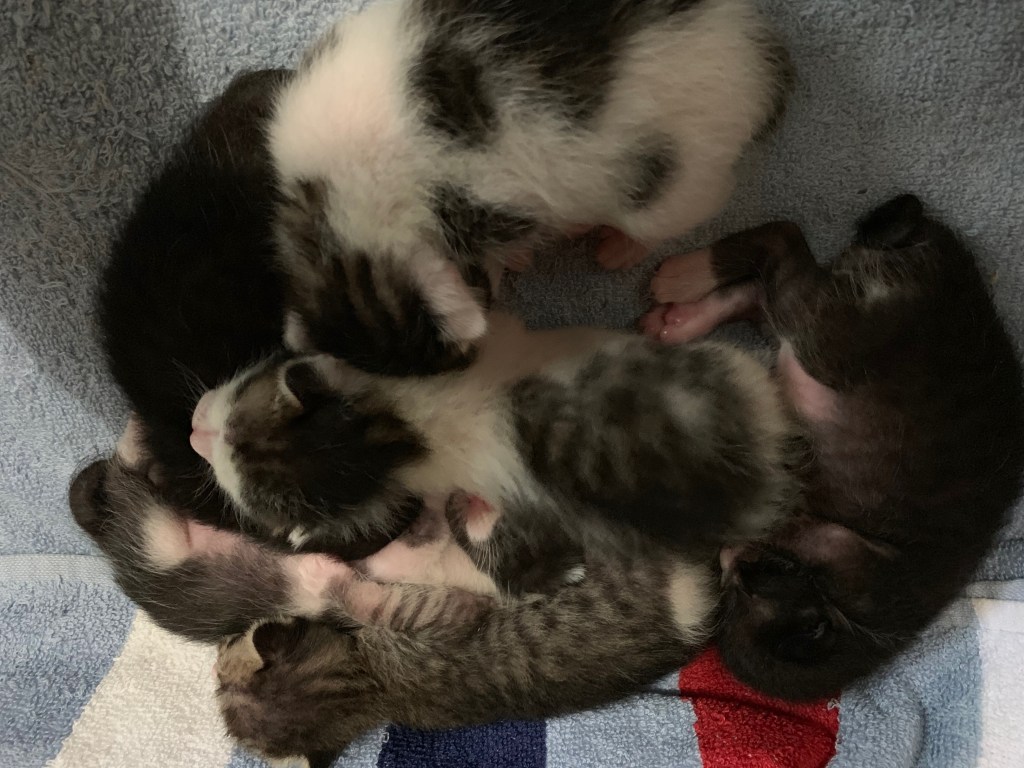
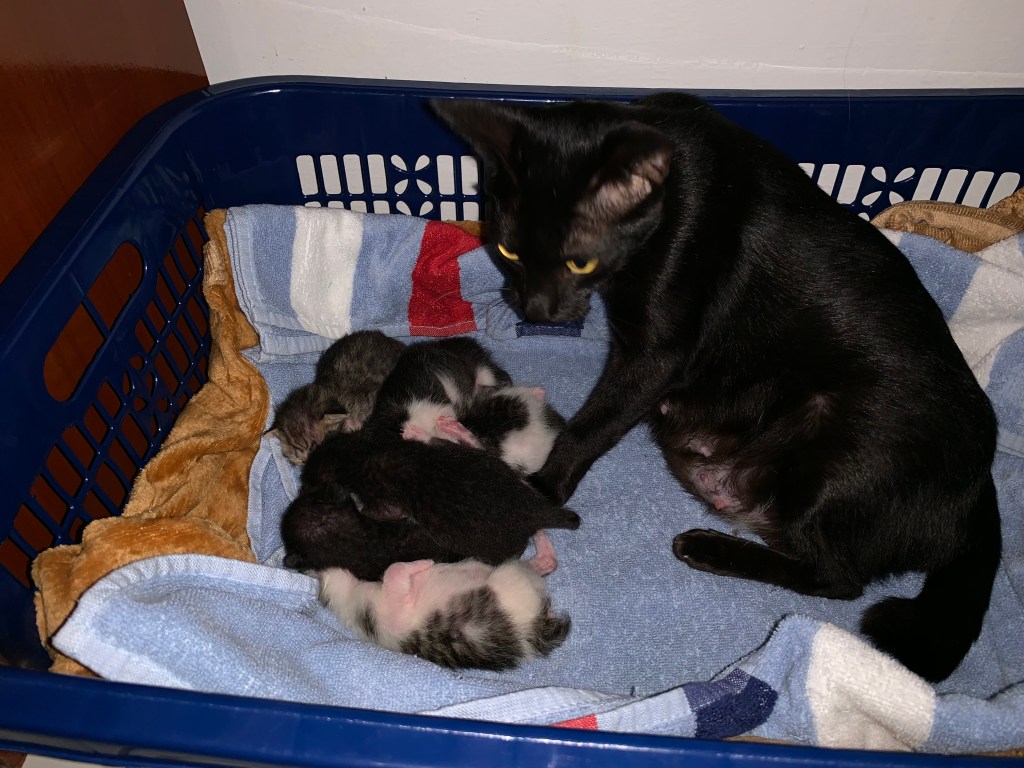
As the first three kittens became young teenagers, they began to do their walkabouts in the jungle, as they still had that wild instinct in them. I would imagine they would venture back into the jungle to find a mate and continue to breed, keeping the snake and rodent population down for the locals. One morning, my little female kitten Mittens, wandered off into the jungle, and of course, never came back. She had been hanging around a larger male, whom I named Bobbitt, with markings much like a leopard cat, another Bengal feline. He was very aloof and kept his distance. I guess it was Mittens’ time to venture off and start her own family. At least I hope that’s why she never came back. I never saw Bobbitt again. Since then, time passed and due to being very busy with our work and me doing a fair bit of travelling, I decided to rehome our cats, knowing in my heart, I had given them a good start in life. They are living with loving local families, and I always get news and photos about them. The six new kittens of course are now happily running around. I have many photos of the cats while they still lived with me, which will always remind me of my experience with these beautiful feral cats of Sumatra, and the privilege of raising a very special breed, the Bengal. Who knows, we might rescue another one.
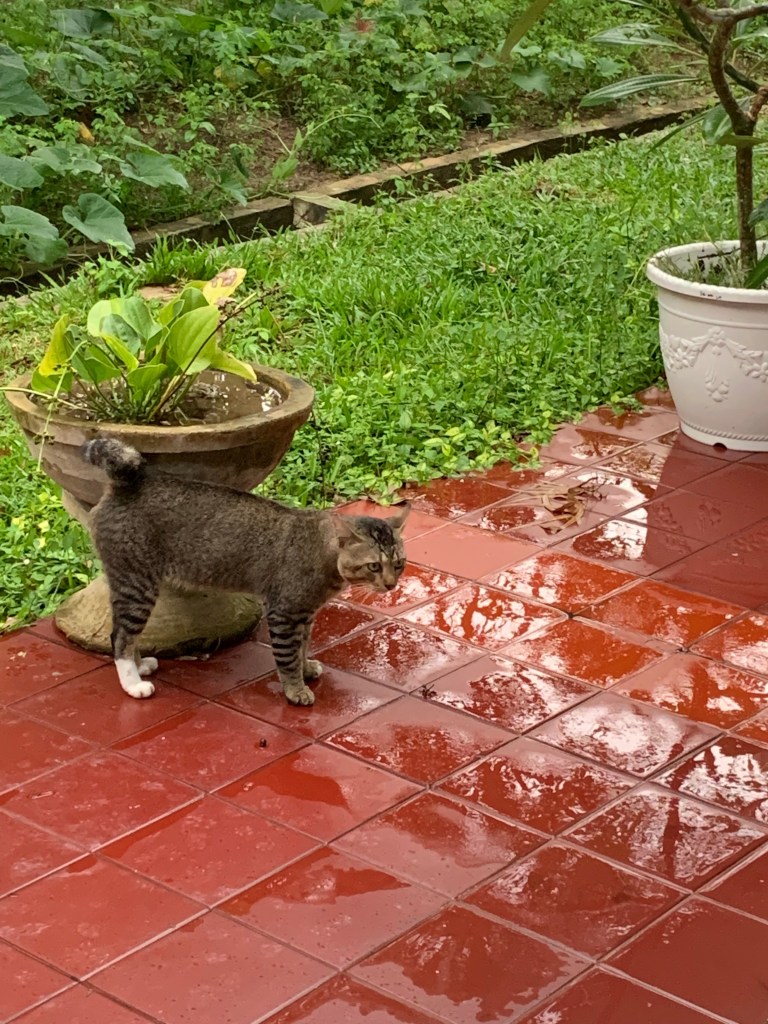

Feral cat interbred with jungle wild cat
Though small in build, these cats are tough and remarkably intelligent, surviving monitor lizards, which can grow as long as two metres in length, King Cobras, wild boar and other larger wild cats
At least six species of wild cats live, and seem to do so harmoniously, on the Indonesian island of Sumatra. The Sumatran tiger is the largest. The Sunda clouded leopards and Asiatic golden cats are in similar size but a little larger than a domestic cat, then the marbled cats and leopard cats, similar size to domestic cats.
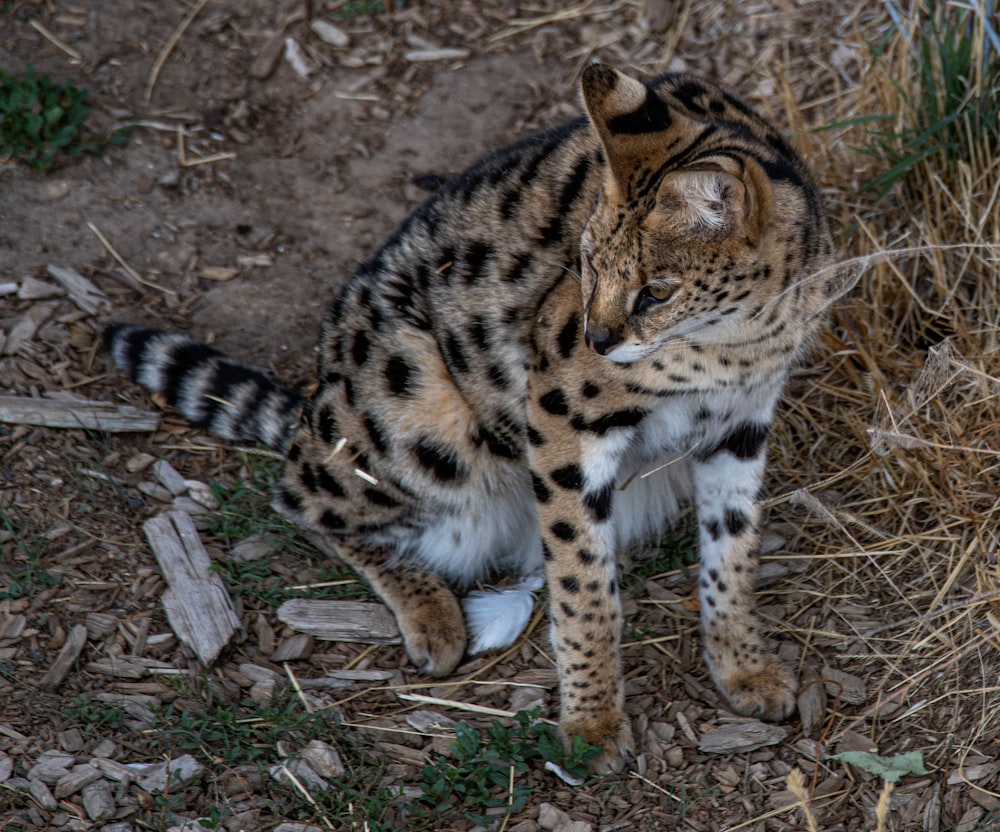

Several cat breeds are defined by the morphological variation of the tail. The Japanese Bobtail is a breed that has been accepted for registration only within the past 50 years; however, the congenital kinked tail variants defining this breed were documented in the Far East centuries ago, and the cats are considered ‘good luck’ in several Asian cultures.

We have found the people of Sumatra are some of the most friendly, polite, and relaxed we have met. They are proud of their rich heritage and, despite their isolation, are eager to share what they have with the outside world, including their feral cats. Their smiles are infectious, and their hospitality is unmatched.
We have had the privilege of living on the island of Sumatra for seven months. Known as the “secret valley of Sumatra” by the Dutch, was one of the last places in Indonesia to fall to their control, as late as 1903. Local cultures remain very traditional, and tourists are few and far between.
I plan to visit my extraordinary cat Chloe in the next couple of weeks. Who knows what interesting stories her kittens might provide for me, and so the saga of the Sumatran feral cats continues? I wonder if she’ll remember me?

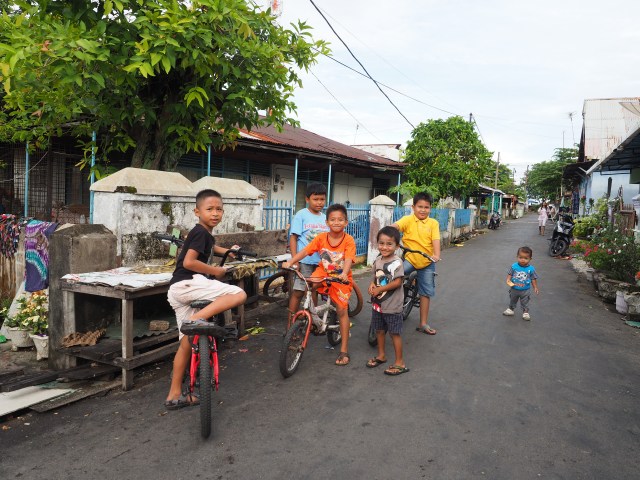
The older boy, short and chubby, seemed the leader of the group. He smiled and waved at me, “Selamat Pagi Bu,” good morning mam. “Selamat Pagi, Apa Kabar,” good morning, how are you? I replied. “I am good,” he replied. “What’s your name,” I asked. “Yogi,” he replied. He sauntered over to me, three younger children in tow. Their smiles never leaving their faces. The older boy took my right hand, and bowing slightly touched the back of my hand to his forehead. The younger children followed suit, some with their forehead, some with the tip of their nose, then ran off with great excitement and keenness to continue playing.
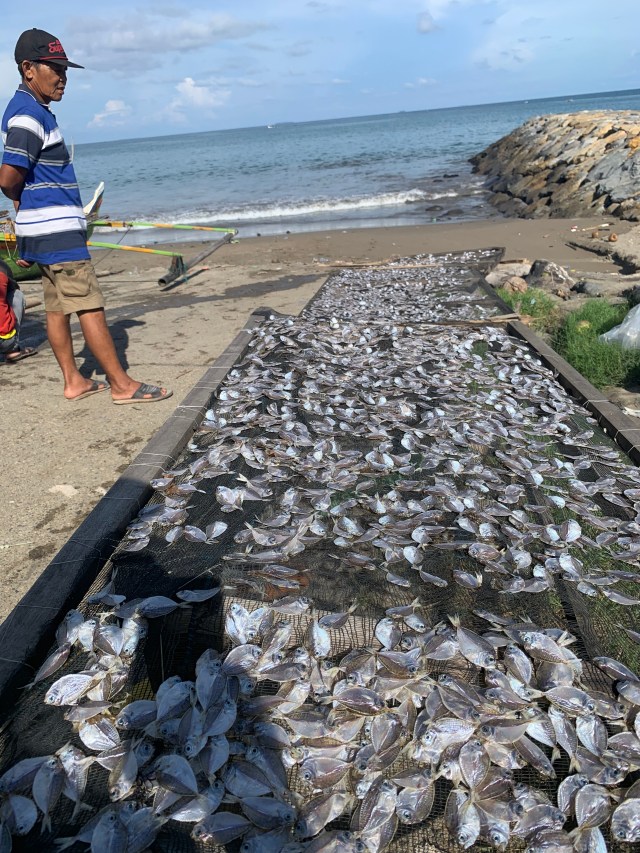
Wherever I go on the Island of Sumatra, I notice the Indonesian people are very hard workers, given the opportunity. They rely on fishing as their livelihood and have chickens running around their yards. These people are very poor.
They believe that the best solutions to breaking intergenerational poverty lies with the next generation. Having education and healthcare, as well as excellent infrastructure, is a major factor in alleviating poverty. The brightest students of Southeast Asia leave home to pursue higher education, commonly in the United States, UK, Australia, or the Netherlands. The government spends huge amounts on scholarships for Indonesians to study abroad. Soon this will be changing, with the Indonesian government opening up access to the local higher education sector, through partnerships with private Indonesian institutions, so students won’t need to leave home to get a world-class education. Thus far, the University of Cambridge, the University of Melbourne, and the University of Queensland have expressed interest in operating in Indonesia. The regulations also encompass a mandatory partnership with local private universities. In addition, the only majors they are allowed to offer are in the fields of science, technology, engineering, and mathematics. Having met a number of Asian students in Australia, achieving masters and doctorates in these disciplines, and hearing about their lifestyle back home, having come from such poor backgrounds, I was keen to learn more about their country and see their living conditions firsthand in Indonesia. Most students go back to their countries, offering their skills to improve productivity and economic growth, providing their families with a better life. An example of this was a young man I met.
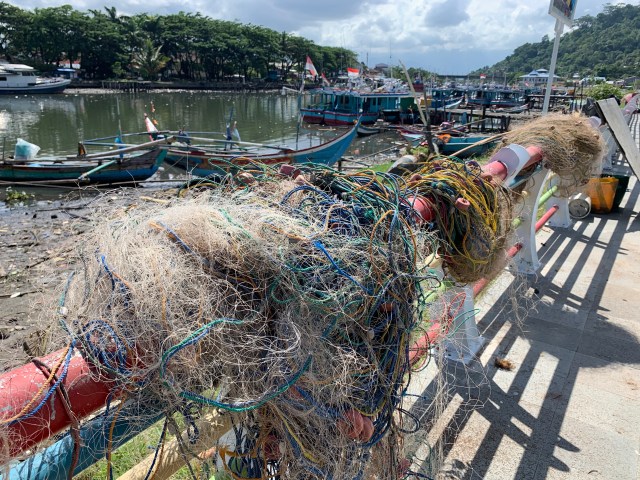
Madi grew up in the backwaters of Sumatra. His family’s house was built on stilts to prevent flooding, as it was on the river’s edge, with the wild Sumatran jungle as the backdrop. His father fished every day to provide food for the family, as well as working on plantations to earn a little money. They had no electricity or a flushing toilet. Madi was the oldest of six children, and always harbored curiosity for the unknown as he said. He felt a sense of satisfaction on discovering anything new and vowed to one day find a job that would allow him to keep learning and help his family.


These children are also subject to work in agriculture, which exposes them to extreme heat, pesticides, and organic dust. Long hours, working with dangerous tools and machinery. These plantations are generally located near villages. Poor quality and low availability of schools and low regard for education in rural areas contribute to a steady supply of child labourers in the plantations.
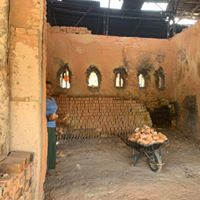

“I worked hard at school, studying at night by candle light,” he said, “but it paid off. I received my first scholarship in secondary school.”
As the oldest of six children, Madi felt extremely lucky to be able to help relieve a bit of his parents’ financial burden with the scholarship. Through the company that he received his award from, he could get a university scholarship, he, of course, was extremely keen and decided to apply. This would pay for him to study at an agricultural institute, and also allow Madi to gain a full-time job with the company. He felt truly blessed. Though the families are poor, they will make every attempt to send their children to school and university. Fathers working in the plantations and mothers selling fresh produce.

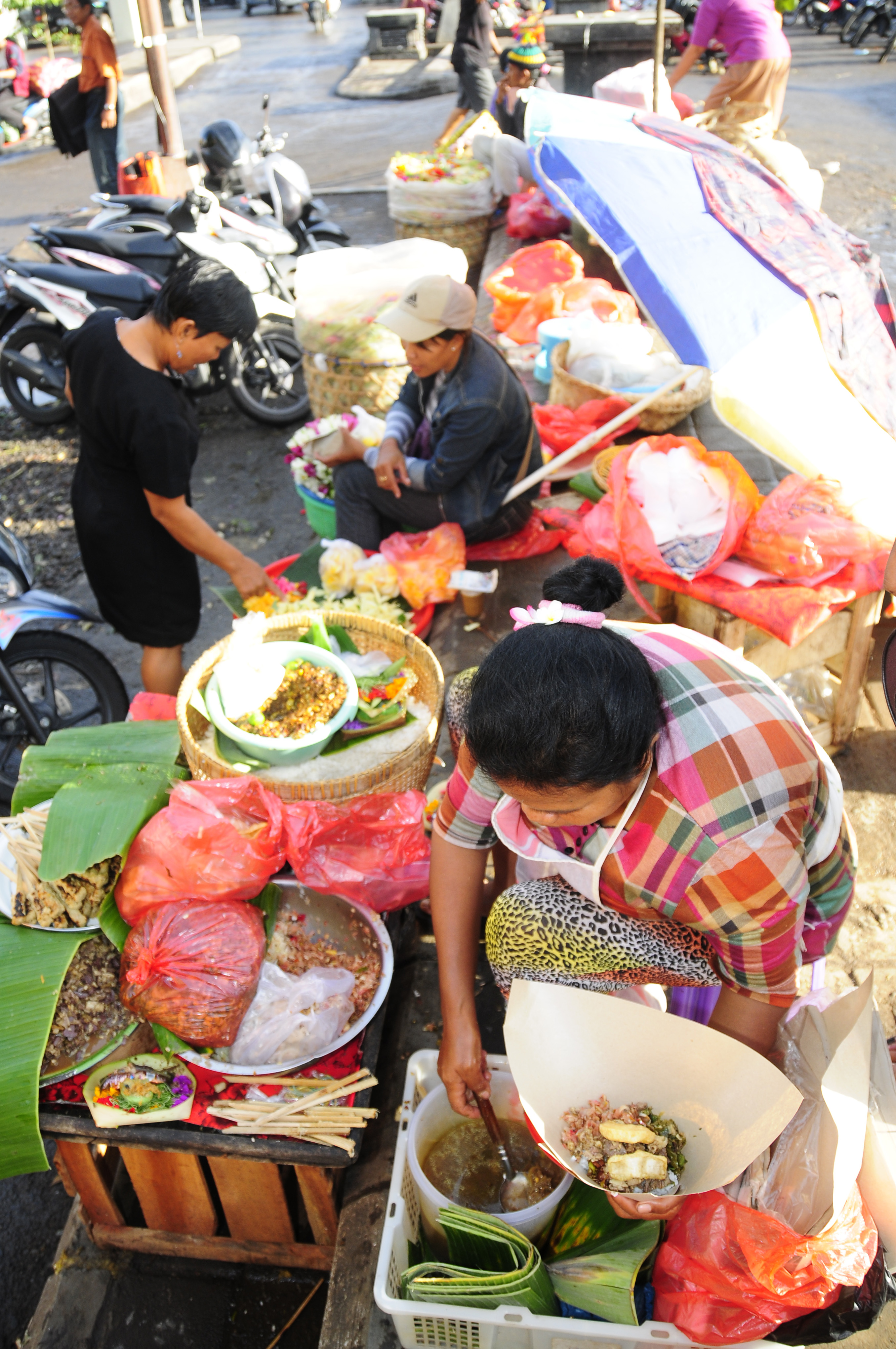


Sitting quietly amongst shabby shacks, dirt, chickens, and cats, in the village, I watch Yogi and a group of younger children hanging on a branch, bending it to the ground, so a little girl could grab the end. “Lihat Bu,” look mam, yelled Yogi. The branch catapults into the air with the little girl hanging on. Letting go, she falls to the ground laughing, amazingly no broken bones, ready to try again. Having such excitement and eagerness for more, I find these children quite adventurous. They then run off giggling to play “let’s pretend.” Yogi, with a big grin across his face, holds up his shoe, “pretend mobile,” to do a “let’s pretend selfie.” The rest of the children quickly stand behind him, looking up at the pretend mobile, grinning with excitement to have their “selfie photo” taken, even though the mobile is not real. A simple pretend game that brings so much joy to these jungle children. Yogi being the leader of the group and quite adventurous, was good at creating something out of nothing. I hoped he would become another Madi someday. Before I left to continue exploring the area, I yelled out to them, “Selamat Tinggal”, goodbye. The children rushed over to me to perform Salim. “Nice meeting you,” I said. “Nice meeting you, too,” they replied. Then off they ran, waving back at me.

Happiness is simple. The cellphone is fake… but the smile… is real
The older people are respected through performing Salim, which is like a handshake, touching the back of the hand to the forehead. When shaking hands with an older person, such as parents, grandparents, and teachers, the younger children are expected to touch the back of the older person’s palm with the tip of their nose or forehead, showing respect from the young to the elderly. This is similar to hand-kissing, except only the tip of their nose or forehead touches the hand, not the lips. This is seen in the villages and amongst families.

On the main beaches littered with rubbish, children find coconuts to roll into the surf, over and over again, never getting bored with their simple game. Families fill the beaches with their picnic dinners, waiting for the sunset, a local tradition to end every day. A simple outing, yet so enjoyable and so much excitement. Food trollies set up along the beach and BBQs burning, oblivious to all the litter.


As I continue to explore the village, the jungle of Sumatra closes in on me with stifling humidity and heat. Wiping the perspiration from my face, I continue to walk down the dusty road enjoying the simplicity of my surrounds. I notice how content these people are with how little they have. Poor yet happy, always smiling, waving and saying Hello. Such a humbling experience.
When greeting or introducing yourself, smiling, shaking hands (Salam), and a slight nod is a kind gesture. A medium to a soft handshake is adequate since gripping too hard can be considered rude or aggressive. It would be considered polite to follow this form of salutation. Generally, in Salam, the equivalent of the handshake is to proffer both hands and gently touch your counterpart’s extended hands, before finally bringing one’s hands back to the chest to demonstrate that you welcome from the heart. Politeness, as well as respect, modesty, and loyalty, is prevalent in the culture. Indonesians believe smiling initiates contact, so it’s recommended to smile back in return. Smiling, toward strangers that you interact with, or someone you have eye contact with, is considered polite, being a social icebreaker and to show that you are approachable. Probably that is why Indonesians are rated the most smiling people in the world.
Content with life itself, they survive poverty, sickness, floods, landslides and deadly roads due to poor maintenance. When the floods come, the roads break up and leave gaping holes in the road, which are difficult to pass through especially when they are full of water and you don’t know how deep they are. Traffic is slow due to the condition of the roads, and there are many large trucks, cars and motorbikes over taking on solid white lines, blind rises, blind corners with oncoming traffic. There doesn’t seem to be any road rules. Everyone takes a chance. Some motorbikes are laden with baskets of produce, some have an entire family on, some with helmets and some without.
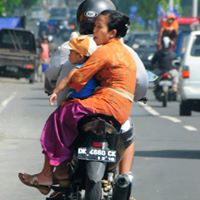

When the main rivers flood, water flows into the plantations bringing fish with it. Local Indonesians find places to fish wherever there is water, in wide, deep dug canals along the side of the roads, which help to prevent flooding across the roads, and along river banks. Children and adults are quite content with fishing rods, some sticks with fishing line and bait, to catch fish for dinner. Mothers sit on a blanket waiting patiently, who knows what they catch in these waters. I guess the Indonesians are quite resilient, you have to be, living in these conditions. Yet they are happy with the little they have. Again, smiling, waving and saying Hello. I guess innocence is bliss in a way.
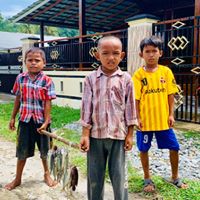

Simple games and things Indonesian jungle children do. So little in life, and yet always happy and never complaining. This is a humbling experience about life for me, making me feel guilty in a way.
As for Madi, having studied in the Netherlands, he hopes to expand his knowledge further in the field of science, continuing his studies at the master’s level, and then working towards his Doctorate. Having had access to a good education, and earning a good salary, Madi is now able to give his family a better life and access to good healthcare, building a new house for his parents’, where they can have electricity, a flushing toilet, and a television. This is proof that access to education and healthcare, and good infrastructure are major factors in alleviating poverty. Madi tells me that when he goes home, he still studies by candle light, of course, until the new house is completed. Such high achievements for a young man from the backwaters of Sumatra. Since meeting Madi, I have come to learn of many young Indonesians who have achieved university degrees, masters, and doctorates. Studying in the disciplines of science, technology, engineering, and mathematics, proving how extremely bright and determined they can be, these young people have come from such poor, disadvantaged backgrounds, and yet they still can achieve so much. This is a sheer determination for education and a better life.
A human being is part of a whole……Our task must be to free ourselves….by widening our circles of compassion to embrace all living creatures and the whole of nature in it’s beauty. – Albert Einstein
Hi, my name is Kat.
I am a travel blogger at junglelifebykat.com currently living in Indonesia.
I was born in South Africa then immigrated to Australia in 2009 where I lived for the past ten years. I am now living and travelling in Indonesia. I would like to share with you my travels and experiences on the Island of Sumatra, as well as other parts of Indonesia, interacting with the locals.
As a child I loved exploring my surroundings and burying myself in books, especially mystery, adventure and fantasy. Now I enjoy reading an assortment of Authors such as Lee Childs, David Baldacci, Khaled Hosseini, Bryce Courtney, Sidney Sheldon and the list goes on.
My stories are about the folk on the islands of Indonesia, how they live, how they survive in the jungle and the type of work they do.
Their love for cats, and how the local cats coexist with the wild larger jungle cats, as well as other wildlife of the jungle.
I’d love to connect with other free spirited travellers and bloggers who like to explore local cultures and travel to out of the way places.
I hope to accomplish sharing my many interesting stories about my travels and the locals of Indonesia, and what we can learn about the Island of Sumatra, it’s people and their simple way of life.
 janiceekat57
 JungleLife by Kat