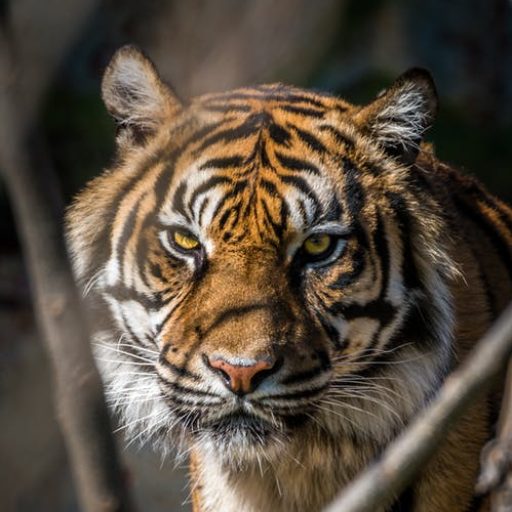
 JungleLife by Kat
Lombok, Indonesia.

Sengigi Beach Lombok

The moment we stepped out of Bali airport, we were surrounded by the liveliness of the crowds and the sweet aroma of frangipani and jasmine filling the air. I was looking forward to my next flight to Lombok, a quieter, more tranquil destination than Bali.
Lombok Airport felt quiet, calm, and peaceful. Even the roads weren’t busy, allowing my husband and I a leisurely drive to our lovely villa on the beach of Senggigi.
Senggigi Beach is known for its stunning sunsets, white sandy beaches, and crystal-clear waters that offer excellent opportunities for snorkelling, diving, and good surfing. The beach also has a vibrant nightlife scene, with bars and restaurants offering delicious local food and live music performances. Senggigi Beach is a gateway to various tourist attractions, such as the Gili Islands and Mount Rinjani.


Mount Rinjani

Ariel view of the Gili Islands
My husband and I hired a motorbike and explored the coastline of Lombok. It’s a quiet, calm rural island, with cows and goats grazing in small clearings near the roadside, scrawny chickens scratching in the rubbish, dogs scavenging for food or sleeping, and cats lolling about.


Lombok cows
The following day we took a trip with a local family to a traditional Sukarara Village where the women create traditional hand-woven textiles, known as “ikat”. Generations have produced these woven textiles using natural plant and vegetable dyes and traditional techniques. Sukarara Villages are encompassed by serene rice paddies and lush cotton fields, in addition to their rich textile legacy.
The Sasak people are the indigenous people of Lombok, known for their unique culture, language, and customs, predominantly Muslim, but their culture is heavily influenced by animism and Hinduism.
The rich cultural heritage reflects their traditional architecture, music, dance, and cuisine. The Sasak people also have a unique style of music and dance, with performances featuring traditional instruments and colourful costumes.
Their houses are built from bamboo and thatch, with an open structure that allows for natural ventilation. The floors are made from clay, then periodically polished with wet cow dung, and left to dry. The reason for this is to ward off mosquitoes.


Traditional Sukarara Village


Sasak women weaving

Sasak women

Sasak Tribal Women


Sasak Men


Rice paddies and cotton plant
One of the most iconic aspects of Sasak culture is their cuisine, which features spicy flavours and aromatic herbs. Some popular dishes include ayam taliwang (grilled chicken with spicy sauce and plecing kangkung (water spinach with spicy tomato sauce). We experienced this for lunch with our Indonesian friends.

Sasak culture has a long and rich history dating back a thousand years, believed to have migrated to Lombok from Java and other nearby islands around the 13th century. Over time, they developed their unique culture, language, and customs, influenced by the Hindu and Buddhist kingdoms that once existed in the region. The Sasak people also had contact with the Chinese, Arabs, and Europeans, further enriching their culture. Despite these influences, they preserved their unique identity and traditions over the centuries. Today, the Sasak culture is part of the cultural heritage of Lombok and is celebrated and preserved through festivals, music, dance, and other cultural events.
Another story told by our guide at the Sasak village was that the Sasak people intermarry with their cousins. The women remain in the Sasak village, never leaving. Their job is to do the weaving. Sometimes a Sasak man will meet a woman outside the village, he will kidnap her and bring her into the village. They will stand under “The Tree of Love” in the centre of the village to make their marriage official. These women from outside the village, once they enter, will adopt the traditions of the Sasak tribe, and never leave the village. This tradition is only adopted by the Sasak people who choose to still live in ancient traditional villages. A tradition that dates back at least four hundred years.
A young man from Lombok explained to me about seaworms, which are a delicacy of the Sasak people. Rich in protein, vitamins, and minerals, believed to have medicinal properties that can help boost the immune system and improve overall health. They are typically eaten raw or lightly cooked and served as a snack or appetizer.
The Sasak Tribe places great importance on the Bau Nyala ceremony, a time-honoured event that carries immense sacred significance. This ritual is deeply rooted in the folklore of the southern Central Lombok region.
While not everyone may find the idea of eating seaworms appealing, they are a significant part of Lombok’s culinary heritage and continue to be enjoyed by locals and adventurous visitors alike.
So the story of Mandalika was told to me by this young man from Lombok.


Statue of Princess Mandalika
“Putri Mandalika was a beautiful princess who transformed into a nyale worm and appeared once a year on the enchanting shores of Lombok,” he said.
It’s fascinating how the nyale worm, a legendary creature that is highly valued and venerated by the people of Lombok, is believed to represent the transformation of a gorgeous princess who was once fought for by several princes from different kingdoms within the regions.
“Putri Mandalika is the daughter of King Tonjang Beru and Dewi Seranting. This king was famous for his wisdom, people loved him very much because they lived a prosperous life. Princess Mandalika lived in a royal palace and was respected until adulthood,” he continued.
“Princess Mandalika grew into a beautiful, charming woman. Her beauty spread throughout Lombok, and Princes from various Kingdoms such as Johor Kingdom, Lipur Kingdom, Pane Kingdom, Kuripan Kingdom, Daha Kingdom, and Beru Kingdom, wanted to marry her,” he said.
“Knowing this made the Princess desperate because if she chose one prince, there would be wars and battles in the land of Sasak. Some Kingdoms even put up a senggeger, black magic used to attract women. This practice of using senggeger to attract women, including Princesses, often had unintended consequences. Instead of winning the Princess’s heart, it made her even more distraught.
After much thought, the Princess invited all princes and their people to meet at Kuta Beach Lombok on the 20th day of the 10th month, according to the calculation of the month of Sasak before dawn. The invitation was welcomed by all Princes and their subjects, and on that date, they flocked to the location of the invitation.
After a while, Princess Mandalika finally appeared, carried by the soldiers who guarded her. Then she stopped and stood on a rock on the shore. After saying her intention to receive all the princes and the people, the Princess finally jumped into the sea. All the people who were looking for her did not find her. Eventually, a clew of colourful worms appeared, revered by the locals as a manifestation of Princess Mandalika,” he said.
Mandalika proclaimed that she would offer herself to all the princes. “I can’t choose one among the princes. Destiny wills me to be something you can enjoy together, uniting you all in love and affection, in the month and date when I appear in another form of myself on the surface of this sea,” she said. These were Princess Mandalika’s last words before jumping into the sea. So, this tradition lives on.
The following day my husband and I took a ride into the hills. Crossing a small bridge, we came across a woman sitting on the side of the road under a tree, crushing rocks and hitting one against another, a difficult task for a woman. Her skin was rough, her hands calloused, a testament to years of hard labour working outside in the sun. Her face etched with deep lines and wrinkles. She appears strong and resilient despite the toll her work has taken on her body. Below the road was a dry riverbed filled with rocks. Some women collect these rocks and pile them on the side of the road, while another would sit and crush them into smaller stones. Despite how monotonous and tiresome it may feel, this woman continued to crush rocks every day without fail. These crushed rocks are sold and used for building houses or gravel for roads. The women use the money to purchase clothing, nourishing meals, and provide education for their children. It made us feel sad seeing this woman working so hard. Giving her a gift and seeing the big smile on her face made our day more meaningful.
On our last day, we took the ferry across to Bali, a trip of three hours. The boat was buzzing with the contagious energy of adventurous young travellers from far-reaching corners of the world, free and uncommitted to responsibilities. They had no fear of travelling alone in an unpredictable world.


Arriving in Bali, we headed to our accommodation in Sanur. Walking along the seashore, we saw many Westerners who have made Bali their home. Dining at restaurants, walking their dogs, or jogging along the beach. They had chosen this island paradise lifestyle of health, meditation, and tranquillity without the stresses of the large cities of the Western world.
The following morning, with a touch of nostalgia, we departed from Bali, leaving behind the intoxicating scent of frangipani and jasmine, and the tranquillity of Lombok.

Sumatra, Indonesia.
Sumatra, the largest Ireland in Indonesia, is an island of jungle, wild animals, wild rivers, and an unforgiving climate. The friendly people of Sumatra offer an array of spicy exotic dishes, loads of delicious seafood and tropical fruits. Their food is always fresh and cooked from scratch, blending the rich flavours of spices themselves. As I walk through the streets of Sumatra’s villages and cities, the smells of exotic spicy dishes waft through the air.

Active volcanoes and hilly rainforests dominate western Sumatra. The colourful city of Bukittinggi is a wonderful place to explore, as well as the villages and culture of the indigenous Minang people. The steep curved-roof architecture of their houses is seen throughout the area.
Due to the heavy tropical rainfall, especially during monsoon season, high pitched roofs help to prevent leeks, allowing the heavy rains to wash off the roofs. The large overhanging eaves help to keep the rain out of the houses, as well as providing shade for the house, as the tropical heat can be rather relenting.


Padang food or Minang food consists of Gulai (curry), Lado (chilli pepper) and Bareh (rice). It is the cuisine of the Minangkabau people of West Sumatra and is among the most popular food to eat. Many locals prefer to eat rice by hand along with the dishes that are served with it. They believe Padang food tastes more delicious this way, but I use a spoon and fork.


Nasi Padang is one of the best tasting foods from Indonesia
Restaurants in Masakan Padang are easily identified be the way they present their food. Plates are carefully piled for dry food, and juicy dishes like curries are placed in big metal bowls or trays. Plates are displayed in the shop window and visible from the street. Most of these restaurants are open from morning till evening, serving the food throughout the day. The food is served at room temperature and the rice is kept warm.


Masakan Padang cuisine’s most popular curry is made with unripe jackfruit (gulai Nangka) cooked with coconut milk, creating a rich delicious curry with a mix of sweet, spicy and fresh flavours. This food is also sold at the local markets.
Hidang is when all the dishes available are served in small plates that are placed at the table, sometimes amounting to ten different dishes. At the end of the meal, you just pay for what you have eaten. This is a popular way to eat when there is a group of people, family, or friends, as the portions served are much bigger.


Medan being Indonesia’s fourth-largest city after Jakarta, Surabaya and Bandung, and the largest Indonesian city outside of Java, is located on Sumatra’s northern coast. Batak and Chinese culture blend seamlessly in its beautiful architecture and in its mouth-watering cuisine. Chinese fried noodles are served with a variety of chicken, pork, shrimp, squid, and scallops. Chewy and thicker rice noodles are used instead of regular noodles made of tapioca.


Durian pancakes, a controversial food with a taste and smell to be desired, i can assure you, is loved for its sweet and bitter taste as well as its fragrant aroma. The cake is called ‘Bika Ambon’, it’s not originated from Ambon which is a city in the far eastern part of Indonesia. It’s not clear why it is called this, but this chewy and sweet cake is good to eat while it is hot, but also perfect when cold.


North Sumatra is the home of the “Batak” tribe. They have their own delicacies, including the most popular delicious dish ‘Babi Panggang Karo’, or ‘Karo Roasted Pork’, which is a local style of pork barbecue. The meat is crunchy, sweet, and served with steamed yam leaves, and green chilli sauce, as well as ‘tauco’, a sweet and salty red sauce made from fermented soybeans.


Another delicious dish is ‘Bihun Bebek’, a rice noodle dish mainly served with duck, instead of chicken or shrimp. They are the thinnest and softest type of rice noodles that can be found in many Chinese restaurants in Medan.

Palembang, the capital of Indonesia’s South Sumatran province, is a port city on the Musi River. The floating colourful markets and houses on stilts are spanned by the Ampera Bridge.


The fabrics of the Batak people are woven in bright colourful jewelled colours.
Tekwan, a traditional Indonesian fish ball soup, is believed to originate from the city of Palembang. The tekwan fish balls are made with fish paste, tapioca, and flour, then boiled or fried before being added to the soup. Usually it is fish or shrimp-based with mushrooms, dried lily flowers, with slices of jicama, garlic, and scallions which are served with the soup. Some varieties of the fish soup also include vermicelli noodles and other vegetables.

Sate, a dish from Padang, West Sumatra, is traditionally made with beef, consisting of pieces of marinated meat or offal, skewered and grilled. These are served in a thick, brown-coloured sauce, combined with meat broth, thickened with rice flour or rice water, and various spices, and served with ketupat (rice cakes).
Other varieties of sate including the Panjang version has more turmeric creating a vibrant yellow sauce, and Pariaman has more chilis giving it a typical red collour.
Rendang, a delicious Indonesian meat dish originates from the Minangkabau people in West Sumatra. Famous for its spiciness and long cooking procedure, often compared to Indian curry because of its unique flavours.

Spicy Beef Rendang
The theory about rendang, was that the generous use of spices and long cooking hours helped to preserve the meat in Indonesia’s hot tropical climate. So the need to preserve meat for longer periods began among the Minangkabau people.

Minangkabau House
Aceh, named after its place of origin, Mie Aceh, is a spicy noodle dish in the form of a soup, topped with fried shallots, cucumber, and crackers. In addition to thick yellow noodles, it consists of beef, lamb, or seafood, as well as spring onions, garlic, bean sprouts, cabbage, and tomatoes.

Mieaceh Spicy Noodle Soup
The dish is generously seasoned with a spicy blend of chili peppers, shallots, garlic, cardamom, and cumin, and is commonly sold by street vendors or at hawker-style restaurants.
Pempek, a traditional Indonesian fish cake made with ground fish meat and tapioca, originates from the city of Palembang, in the South Sumatran province. The story goes, an old Palembang man who was tired of the traditional fried or grilled fish, thought of an innovative way to ground the meat, mix it with tapioca flour, and deep-fry it to get a crunchy and delicious snack.

Palembang Pempek
He would then cycle through the city selling the fish cakes to Palembang citizens. Over time, pempek was recognized as a praise-worthy snack, and today it is a traditional Indonesian delicacy. These round or rectangular cakes are usually steamed, then just before serving, fried in vegetable oil, and cut into bite-sized pieces.
Laksan is another dish made from a mixture of ground fish meat and sago flour. This dish is usually eaten during religious festivities. The dough is shaped, boiled, and drained then finally simmered with coconut milk and some spices, consisting of chilies, shallots, garlic, bay leaves, and galangal. Sprinkle it with fried shallots, to make it more flavourful.
Kemplang, a type of fish cracker made from the same fish dough, is boiled, thinly sliced then dried in the sun. The chips are fried to a crisp and served with soupy dishes or fried noodles.

Kemplang crackers
Makuba cake, a favourite dish among the Palembang people, has a fluffy, delicate texture and the flavour is sugary, yet luscious. Duck eggs and condensed milk are used to create the primary layers of this dish, coming together through a slow cooking process of eight hours. This deliciously luscious dessert is often used as an offering and presented in local celebrations.

Mie celor, a typical Indonesian dish of yellow noodles, is doused in coconut gravy and served with shrimp, boiled egg, and bean sprouts. Occasionally topped with celery, spring onion, chicken, and fried shallots.

Martabak har, both legendary and phenomenal, is unlike other typical egg dishes. It is soaked in a curry gravy, a yellow broth comprising of turmeric, nutmeg flower, cinnamon, chilies, curry leaves, diced potatoes, and coconut milk. A vinegar sauce can also be added for a variation in flavour.
Kue srikaya, an egg-based cake found throughout Palembang and traditional markets, is made from a batter of eggs, sugar, and coconut milk, and has sweet and savoury flavour. The green colour is obtained from aromatic pandan leaves which the cake is put into and steamed for about fifteen minutes.
Celimpungan, also very similar to tekwan, is bigger in shape. It is simmered in a coconut milk gravy with turmeric, pepper, and bay leaves giving the dish an enriching flavour.
Model, a soup dish, consists of fish balls, rice vermicelli, and aromatic clear shrimp broth. Sometimes including ear mushrooms, cucumber, prawns, fried shallots, and served with vinegar sauce.
Although Palembang’s food comprises mainly of fish dough, coconut milk, and vinegar sauce, it is still delicious.
My favourite dishes consist of spicy, chilli, juicy plump prawns served on basmati rice, and covered in a delicious aromatic spicy sauce. Freshly caught fish and large fresh water prawns cooked over a fire, along with an assortment of smaller dishes consisting of spicy vegetables and other delicious delicacies. Indonesia is certainly the spice centre of rich flavours.

Being in lockdown for two and half years, and away from my husband, was quite a challenge. Many memories have been created over those years in South Africa and will remain cherished memories over time.

Late November 2021, my husband flew back to South Africa. We took a trip into the midlands of KwaZulu Natal, to spend quality time with family. Wake each morning to misty rain, the smell of damp earth, and a ginger cat. He was skittish and rather wary of humans. Only when it suited him did he cuddle up to me.
I would call the ginger cat and he would give a quiet meow for a tomcat, then rub himself against my legs. He slept on our bed a couple of times, then took to sleeping on a chair inside. During the day he would sleep on the garden steps and sometimes in the garden amongst the flowers, watching me from a distance. Being partly feral partly domesticated, I wondered whether he would find himself a master, or would he revert to being feral once again?

Another pandemic variant, another lockdown, as we entered the New Year of 2022. Flights were delayed as we watched the lockdowns take place around the world. Panic set in, wondering how and when my husband would be able to return to Indonesia.
By January 10th my husband was able to fly out of South Africa, in a roundabout way via a couple of countries before ending back in Indonesia. Who thought it would take a month to get back to Indonesia!
Now March 2022, floods, and total devastation in KwaZulu Natal. Houses, roads, and bridges were destroyed; families and animals were lost in raging waters and mudslides. What more can we endure! How many more bridges do we have to cross to get to the other side, and once again, start to live a normal life as best we can!
During these past couple of years in South Africa, I have spent precious time with family and learned about the true priorities of life. To cherish our loved ones, as we never know what tomorrow will bring. Now finally 2022 is the year I will leave South Africa, and continue my journey back in Indonesia.
This quote from “Lessons taught by Life”, really spoke to me.
You can smile because they lived,
or cry because they’re gone.
Close your eyes and pray they will
come back, or you can open your eyes and
see all that they left for you. Your heart can
be sad because you can’t see them, or
full of the love you shared.
You can forget about tomorrow and
live for yesterday, or you can be happy for
tomorrow because of yesterday. You can
cherish their memory,
or remember only that they have gone.
You can cry and not accept,
or you can do what they
would want. Open your heart and smile,
love…and go on.
What is important to me, is living a life of purpose and meaning. Living my life in a way I want to be remembered, and looking back at the end of my life having no regrets.

Diane Ackerman once quoted, “I don’t want to get to the end of my life and find I have lived just the length of it. I want to have lived the breadth of it as well.”
No matter how many bridges I still must cross in my life, the past two and a half years was only a moment in time.
Indonesia.
Rahcmat paddles his small wooden canoe up the narrow tributaries of the mighty Kampar River, tall dense walls of thick jungle tower on either side of him, with sounds of chirping birds and the high pitched cry of a fish eagle. Slowly, he paddles his way towards the tall reeds to retrieve his fishing trap. The local fishermen drop their fish traps amongst the tall reeds, checking their catch each morning. During the day it becomes too hot and humid. The trap is a large box shape framed with net. “Fishing and farming provide food for our families and brings in enough money to sustain our livelihoods,” said Rahcmat.


The Kampar River forms the backbone of the island along its west coast. Meandering through, spilling into the Malacca Strait on the east coast. Local community groups work at making forest and river sustainable for its inhabitants.
Local Rangers help protect the reserve, plant native species to replenish the natural rainforests, and not to overfish the delicate ecosystem. Sustaining the fish species also sustains their livelihoods. Surrounding villages need education, and employment which is all part of the process, creating a revitalised landscape where the people can live in harmony with nature.


Drying fish is a great way to preserve large quantities, especially in a developing country such as Indonesia. The fish can be preserved between six to twelve months.


The elders stay in the fishing huts on the river and do all the fishing. Later in the day, the younger people will come to the fishing huts to collect the catch and take it back to the village and markets to sell. Often you will see locals on the side of the road with a makeshift wooden kiosk selling dried fish.


“In the past the fish was so large that one man alone could not lift a Wallago fish. I was strong and young then”, said Rahcmat. His smile fading on his sun wrinkled face.


These fishermen and their families live in wooden houses on stilts due to rising tides, along the river’s edge. There are thirty households along the river who have relied on this souce of income for many years. “We catch Bagrid catfish, sheatfish, minnows, Wallago, which are much smaller now, and there are many snakeheads,” said Rahcmat. “Women join in the fishing as well”.
“In the rivers giant catfish and stingray are still found and sold for their meat. When I see a very large shadow in my net or under my boat, I know it is the giant stingray.”


Rahcmat continued his story. “Giant stingrays weighing over eight hundred pounds live in these rivers. They grow much bigger than the giant catfish,” spreading his arms as wide as he could. This is larger than a mountain gorilla. Fishermen don’t fish for the giant stingrays, but occasionally they get caught in our nets. Giant stingrays are great fighters if they are hooked and can drag boats around the river for hours.”
To smoke fish, the locals use non-resinous hardwood such as malaswood, komodan, rambutan or coconut husk or shell. This will produce quality smoked fish. Softer, rotting, or mouldy wood produce smoke containing a chemical compound, that causes undesired aroma and smells.


On the wide rivers Gill-nets and hooks are used. The wide rivers wind their way through the jungles where they end up as narrow tributaries surrounded by dense jungle. They are so narrow that the wooden canoes can just manage to manoeuvre up them.

There are many freshwater fish in the wild rivers. Waders are tiny fish found in freshwater rivers, ponds, and reservoirs. Waders are quite popular in Indonesia, especially Java, and usually consumed by coating in a little flour then frying. Fried wader is crunchy, savory, and eaten with sambal and rice. Tilapia, also called Nila, are eaten by locals, and small crayfish which are delicious.


The male catfish are smaller and narrower than the female catfish. Its head is up to one inch larger and wider, and they have longer and brighter coloured fins. Female catfish can grow up to one inch larger than males and are wider and rounder than males by one and a half inches in the belly area for carrying eggs. Catfish are slippery and have a moustache. This fish has a soft, savoury flesh and is served with spicy chilli. The most favourite dish is Pecel Lele.


“In northern Thailand, on the Mekong, a giant catfish weighing six hundred and forty-six pounds was caught many years ago”. But there are a lot of much bigger fish out there,” smiled Rahcmat.
There are many other smaller freshwater fish such as Gurame Fish which live in rivers, ponds, and occasionally come to the surface of the water to breathe air. Cork Fish are also found in rivers, swamps, lakes, and waterways, eating various insects, small fish, frogs, and tadpoles. Often Cork Fish are carried away by flooding into the trenches around the homes or entering fish-raising ponds, becoming pests because they will prey on the pets in the pond.


Nearly forty per cent of the Indonesian people live below the poverty line, so fishing is a way of life and provides an important food source for millions of people. It’s difficult to say which species are being caught where and in what quantities.


A small bright red fish was discovered in a river which is thought to be endemic. It swims to the water surface only in the evening, feeding on algae and zooplanktons. During the day it swims to deeper waters. As some fish species disappear new species appear.

Who knows, these giants may reappear in the wild rivers of Indonesia once again.
Written with respect for the forest and the lives it shelters.
Sumatra, Indonesia.

How do we protect the wild places that still breathe around us?
How do we ensure that forests remain green, rivers run clear, and the voices of wild creatures continue to echo through the trees?
Perhaps the answer begins not in grand declarations, but in moments.

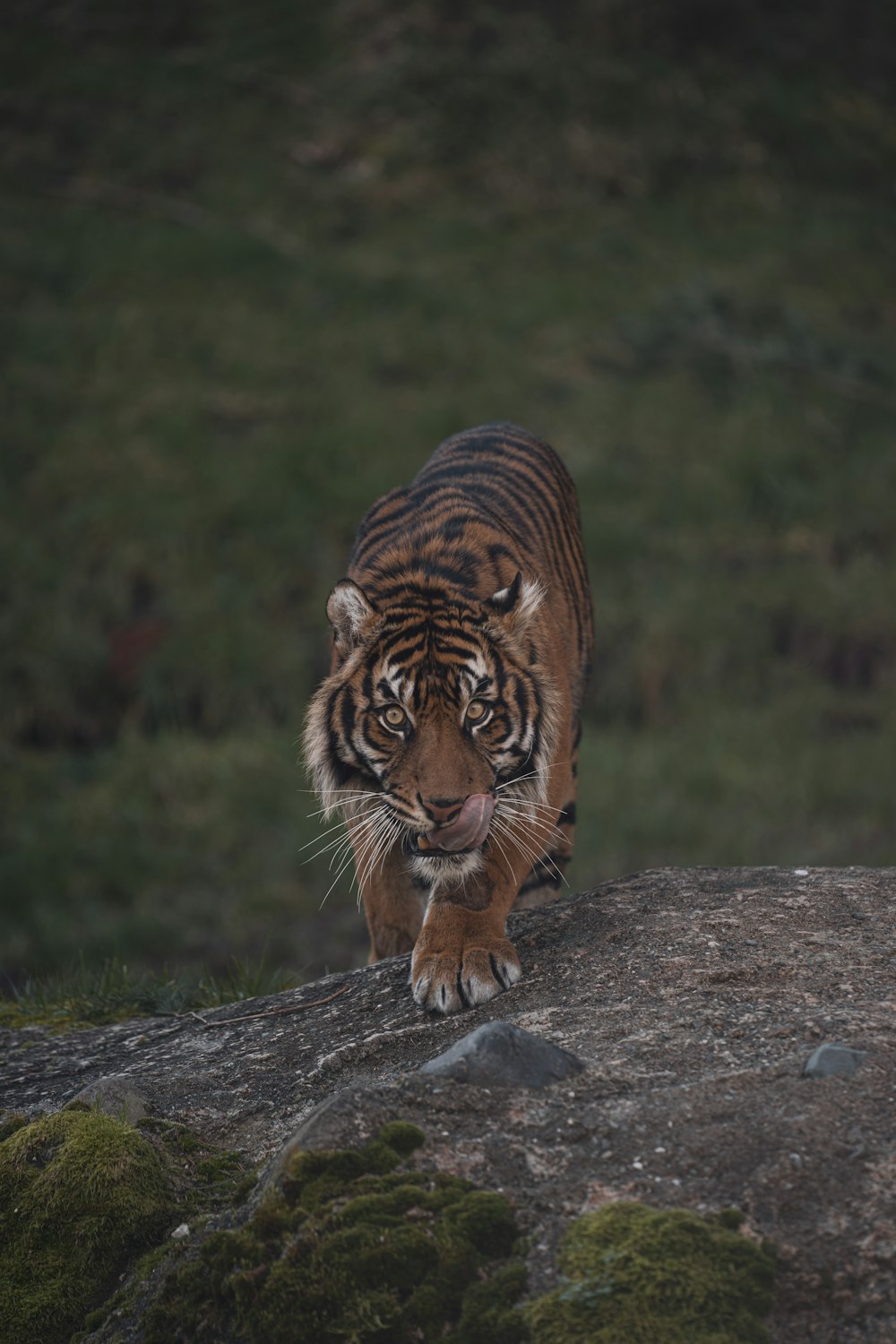
She arrived at the rehabilitation sanctuary as a young tiger, thin and injured. One of her paws had been badly damaged, and she carried the wary gaze of an animal who had known hardship too early in life. Patient hands tended her wounds. Quiet routines restored her strength. Slowly, she began to heal.
Months passed.
When the day of her release finally came, she had regained her strength. Her muscles were firm beneath her striped coat, her movements fluid and sure. Before returning her to the forest, she was gently sedated so a tracking collar could be fitted, a simple measure to ensure her safety as she adjusted once more to the wild.
She was placed in a temporary forest enclosure, allowing her time to reacquaint herself with the dense humidity, the unfamiliar sounds, the scent of leaf litter and damp earth. The air was thick and warm. Cicadas hummed in the canopy. Somewhere in the distance, thunder rolled.
When the gate was opened, she paused.
For a brief moment she looked back, wide amber eyes, alert and fierce. A low growl vibrated from her chest, not in anger, but in instinct. Then, with powerful grace, she leapt forward.
Her body stretched and gathered in long, effortless strides. Earth scattered beneath her hind paws. Birds burst upward in startled flight as she disappeared into the green embrace of the forest.
There was a final rustle of leaves.
Then silence.

A deep roar echoed faintly in the distance, a sound that seemed less like farewell and more like belonging.
She was home.

Tears blurred my vision. The jungle heat pressed heavily against my skin, the scent of rain rising as the afternoon storm approached. It was a bittersweet moment, joy for her freedom, and the quiet ache of knowing I would never see her again.
Saving one animal may seem small in a vast world. But standing there, listening to the forest close around her, it did not feel small at all.

Wild creatures do not ask for much. They need space. Food. Water. The freedom to move, to hunt, to raise their young beneath open skies. Forests provide this, intricate, breathing ecosystems where predator and prey exist in delicate balance.
When habitats shrink, that balance shifts. Yet where forests are allowed to stand, life continues.


Tigers are solitary wanderers, moving silently through dense vegetation, their striped coats dissolving into shadow. They are powerful, yes, but also elusive, cautious, deeply attuned to their surroundings. In the wild, their lives are shaped by territory, instinct, and the rhythms of the forest.
Watching one return to that rhythm is unforgettable.


Forest Deer Hunted By Tigers


Wildlife Hunted by Tigers


It made me realise that conservation is not always dramatic. Often, it is patient. Quiet. Muddy. Humid. It smells of earth and rain and animal musk. It is early mornings and long waits. It is hope carried carefully in human hands.
And sometimes, it is simply opening a gate and stepping back.
Do we want a silent world, one without the distant call of wild animals at dusk? Without the unseen movement in tall grass? Without the knowledge that somewhere beyond the trees, something magnificent still walks?
Perhaps our legacy is not in controlling the earth, but in choosing to protect what remains wild.
That day in the forest reminded me that small acts matter. That healing is possible. That release is possible. That renewal is possible.
Some memories do not fade.
The sound of her last rustle in the undergrowth still lingers.

Written with respect for the forest and the life it sustains.

I have been in South Africa since December 2019, and so much has happened since then. At the beginning of the lockdown, I experienced fear, sadness, anxiety, feeling overwhelmed. Will it ever end? Will life be positively normal? Now it’s December 2020, and how my life has positively changed. A New Year begins.
Sometimes we have to leave our comfort zone to grow and make beautiful.
It’s Christmas eve 2020, and tomorrow I will visit my 85-year-old mother. She is never excited about Christmas but realises how grateful she is. At the end of November, I had to move my mother from her flat of 18 years at an old age centre, into frail care at another old age home. I find moving to a new house can be very stressful, imagine how much more it is for an 85-year-old. Leaving behind her friends and four cats, whom she had from kittens, was a huge adjustment for her. She often says she wishes to go “home”, as she misses her cats terribly. But I do believe it’s the lifestyle of independence she once had that she misses most. Moving my mother has made me realise how being in the moment and enjoying every minute of the day is so important, instead of wishing time to pass. Life is fragile. Let us nurture it.


Shannon Alder once said, “one of the foremost important things we’ll do on this earth, is to let our loved ones know that they’re not alone.”
For me, the new “normal” may be a time of acceptance and new challenges. To manoeuvre forward, embrace it and learn. We cultivate our memories through rituals, and daydreams, joyfully lost in our thoughts. Allow them to live alongside us, offering an everlasting connection to loved ones lost, bringing comfort and a spontaneous spirit to life. It’s a time for empathy and taking note of my mother share her memories with me. Nostalgia is often the salvation for the aged; don’t let it fade away.


Helen Keller once said, “whatever we enjoy can’t be lost, and everyone that we love deeply becomes a part of us.”
As I enter into a new era, a new journey mindset, new challenges and personal growth, I keep my dreams alive, reflecting. Now is the time to adopt new approaches to a new life: Focusing on the four “M’s” – movement, mindfulness, mastery and meaningful social relationships. Speaking things into being, whether by prayer, journaling or observation. Creating balance through heart and mind. I can’t go back, and I can’t create through past experiences, only forward. Learning self-compassion, kindness, empathy, tenderness, forgiveness, a caring conscious living. Realising my fear and what is in my subconscious.
How I have changed through these uncertain times! Attitude is everything, no matter what life throws at you. I have focused on my growth and not the situation, gaining more confidence in myself. I embraced this time of being in lockdown, becoming more accepting and resilient, with family support. The way to self-mastery: always remaining a student, keeping an open mind, and staying humble. Though there is pain, it’s how we relate to it, how we work with it.
“Gift from the Ocean,” by Anne Morrow, she writes. “Loving someone doesn’t mean that we have to love them all the time, every minute of the day. Most of us demand this, and it’s not possible, even if we pretend to. Having little faith in the flow of life, love, and relationships, we are afraid it will never return. Insisting on permanency, duration, and continuity. In life and love, the only continuity is in growth, fluidity, and freedom, as the dancers are free, barely touching as they pass, but partners in the same pattern”.
My goal is to achieve self-mastery, to become less influenced by outside influences. See how things are, not how they should be or could be. To have a more authentic life experience. Being in the moment, slowing down, embracing more immersive, curious, authentic, and interactive experiences. Building wellness, me-time, cultural experience, mindfulness, sustainability, and happiness into my life.

I have learned new things such as watercolour painting, journaling, and spending more time meditating, building my spiritual and physical fitness. Focusing on a healthy lifestyle and walking in nature. I can’t walk the new path if I am hanging onto the old. This new beginning is a time for emotional cleansing and rejuvenation.
We cannot escape time. We age, and life brings its joys and sorrows. Enjoy as many experiences as you can in life. Travel, engage with people along the way, experiencing their cultures, and indulging in many books. Life is about creating memories to sustain us through sad times and happy times of our lives. As we learn we progress through the journey mindset, learning how to survive what is to come. Let’s focus on the positive and practice gratitude every day.


VISHEN LAKHIANI once said. “Pushing ourselves into something new, allows us to discover a world of many opportunities. We’d most probably get hurt along the way, but amazingly once we heal, we’ll be somewhere we’ve never been before.”
Born in 1917 and educated at Oxford University, Diana Athill was one of the great book editors of the twentieth century. She was also an excellent memoirist, as evidenced by her book, “Somewhere Towards the End.”
For those of us who demand answers to the meaning of life, Diana Athill didn’t mind not knowing it all. Diana died in 2019 at the age of 101.


Life is a journey, let us not forget to embrace it. Looking at the beauty of the world, lets’ take the journey and not focus on the destination.
Words from Sai Baba. “Life is a song, sing it. Life is a game, play it. Life is a challenge, meet it. Life is a dream, realize it. Life is a sacrifice, offer it. Life is love, enjoy it.”


Sumatra, Indonesia.

Meeting these magnificent elephants was a rare privilege. As I stroked their trunks, their gentle eyes regarded me with quiet curiosity. Their skin beneath my hands felt rough and deeply wrinkled, the creases dusted with dried earth. Their trunks moved back and forth, exploring, breathing in new scents, lightly brushing against me as if memorising my presence.

Meeting these magnificent elephants was a rare privilege. As I stroked their trunks, their gentle eyes regarded me with quiet curiosity. Their skin beneath my hands felt rough and deeply wrinkled, the creases dusted with dried earth. Their trunks moved back and forth, exploring, breathing in new scents, lightly brushing against me as if memorising my presence.

The Asian elephant has softer features and smaller ears than its African cousin. Its ears move constantly to help regulate body temperature. Although elephants can only see short distances up to about twenty metres, their vision improves in shaded forest environments. They rely far more on their exceptional hearing, powerful sense of smell, and highly developed sense of touch.

A vast stretch of natural forest serves as a buffer, allowing wild elephants to forage, roam, and socialise freely. With thousands of hectares available, they can thrive without being driven away.

Each elephant can consume up to four hundred kilograms of food daily. Their diet consists of forest plants, rattan, bark, fruits, and seasonal vegetables.

Under careful management, the elephants have grown stronger and healthier. Calves born within the herd represent hope, not just for their family group, but for the survival of their species.

Across Asia and Africa, with patience, understanding, and dedication, approaches are demonstrated that prove coexistence is possible between animal and human.


Watching these elephants was unforgettable. Getting to know their individual personalities, their playful curiosity, and the deep bond they share with their mahouts touched me profoundly.


Written with respect for the forest and the lives it shelters.
My 2020 plans had changed overnight. What would this mean? Flying out of Indonesia, I had no idea that I would not see my partner again for quite some time. I was about to experience a journey into and out of a countrywide lockdown, a time of confusion, emotion, reflection, and personal growth.
After my South African trip, I had planned to fly back to Indonesia. My plans now organized, It was going to be an exciting year, I thought. All my travel plans for 2020 are on hold. Normality had only been a few weeks ago, with reality stretched into the distant future.
Arriving at Johannesburg airport beginning of December, my partner and I were finally on African soil. In the next half hour, we would catch our flight down to Durban. Stepping off the plane at Durban airport, we smelt a whiff of rain before a storm. A local African band greeted us as we walked through arrivals, with sounds of drums, flutes, guitars, rattles, and shakers resonating around us. These were the sounds of the rhythm of the African spirit. A strong aroma of coffee wafted through the air from the Mug and Bean restaurant. We looked forward to spending Christmas with our families.
We planned to spend a couple of weeks with my partners family before I headed to Pietermaritzburg, a large and vibrant country town in the midlands of KwaZulu Natal, to spend Christmas with my mother. Driving through the suburbs on our way home, we could smell a hint of spicy samosas and smoky boerewors braais in the air. These were the smells that reminded us of South Africa.
Unfortunately, just before Christmas, my partner had to return to Indonesia. He suggested I stay a little longer in South Africa and spend quality time with family. Unbeknown of what was going to be ahead of us.
There had been much talk and reporting of a virus called COVID-19 from China. The reports were frightening, and I felt a low level of anxiety starting to grow.
Since there have been many theories where this virus originated from, but really, where did it originate?
Being aware of this new virus, I continued with day to day activities, shopping, going out to lunch, going to parks, beaches, and spending time with family and friends. I could feel my anxiety growing as I watched the statistics escalate around the world.
There was a relaxed atmosphere milling amongst the people in the supermarkets. Before the South African president’s speech, South Africans were aware of “corona.” Still, they weren’t too concerned about it, as there were only a few cases reported, of which were international travellers. “What do you think about this coronavirus?” I asked a local in the Supermarket. “ I don’t think Africans will be affected. It is quite serious; I think we can still go to church and pray,” he replied. It was going to be a challenge, changing the behaviour amongst South Africans who felt it was necessary to still go to church to pray, defying the appeal to avoid crowded spaces. Were these people in denial, or just didn’t know what they didn’t know, or understand?
As this virus rapidly spread to different countries around the world, people started dying. With heightened anxiety, every morning and evening, we watched the news wandering what was going to happen.
I witnessed hundreds of people queuing down the roads in Pinetown, waiting to collect their pensions from South African Social Security Agency. Some people would stand there all day. There was no social distancing. How would this be controlled?
South African health workers decided to be proactive by going from house to house, looking for positive cases before hospitals became overwhelmed. Triage field hospitals set up to treat people who tested positive. Hospitals would receive critical instances only. These are still early days and a long hard struggle ahead.
Finally, the South African president announced the lockdown for the country. I was dreading having to remain in lockdown for 21 days, not being able to go out. It was going to be a challenge. Fortunately, I had a large garden to walk around and a swimming pool for those hot African days. So many people didn’t have these luxuries.
Fear started to rise within me, and I prayed that I would not lose any loved ones or close friends during this crisis of the COVID-19 virus.
A large percentage of people in South Africa have no health insurance and rely on public clinics and hospitals. These facilities are overcrowded, understaffed, and unhygienic. Hundreds of people of different cultures sit shoulder to shoulder waiting, being aware of possible TB and HIV cases amongst the crowd. Now Covid-19. Some people in wheelchairs and walkers. How would these people get their medications in the future?
Compounding the situation that there is a high unemployment rate in South Africa. Expecting these people not to go to work is not going to be an option as they needed the money to support their families with food. Education was critical, but how would this be possible for people who had no access to information or social media? Explaining to people why they mustn’t shake hands, hug each other or go to gatherings, that this was not acceptable anymore. Local people did not know where to seek help. So many of them didn’t even have the basics.
We decided to help our security guards in our suburb by making them face masks and buying them hand sanitizer, supporting them and our domestic staff by continuing to pay their wages until they could return to work. We would get messages from the guards and staff thanking us for looking after them.
I was pleased that I had made a trip to Pietermaritzburg to spend Christmas with my mother three weeks before returning to my partner’s family in Durban and then on lockdown. I was not going to be returning to Pietermaritzburg for quite some time. Neither was I going to be flying back to Indonesia, let alone visit my family in the U.K.
I now had to make plans for groceries and pharmacy home deliveries, as well as for my mother in Pietermaritzburg. My 2020 plans had changed overnight.
Elderly poor people who were reliant on an income to support and feed their families were going to suffer the most and could starve during the lockdown. Whole families living in one room cannot distance themselves from each other. Poor people living in squatter camps were so close to each other. Their shacks made of wood, cardboard, tin, and other scrap material. The size of a garden shed. These people would use fires for cooking and candles for light, often causing accidents and fires. If one person got sick, it would spread rapidly like wildfire amongst these people. Thousands would die.
I decided to head for Checkers first thing in the morning to get some supplies. It seemed everybody had the same idea. I have never seen so many people and ques going all the way to the back of the Shop. People were emptying the shelves, panic buying, standing trolley to trolley.
There were reports of people fighting in Supermarkets over items. People were panicking. Fear would become more dangerous than the virus itself, as it affects our immune system and mental health.
The virus had now changed my day-to-day routines, leaving me with more time to start new routines and habits. My partner and I sent messages via WhatsApp and connecting via facetime. We were lucky to have social media to communicate, where so many people didn’t. We discussed our days, work, and new projects and online courses we could do.
Now was a time to reflect on our lives and what was important to us. Reassess our priorities, learn new things, reassess medium, and long-term plans, and revise our goals. We encouraged each other to keep a positive attitude, as this would be a period of fear amongst many around the world. “ This seems like world war three,” I said to my partner. “Yes, and we can’t even see our enemy,” he replied. Though we were both anxious, it was essential to know that we were both safe.
I seized this opportunity to help struggling friends. It was vital to express our concerns to one another and feel heard. There were feelings of frustration, struggling with long-distance separation, and mental health issues. I felt motivated by helping my friends by improving my journey through positive mental health. Knowing I could make a difference and making my life meaningful during this time of struggle. I would talk to them weekly to see how they were coping, giving them support and encouragement when feeling down, and sharing with each other what we were doing. Some of my friends also had partners working overseas and they were happy someone else understood what they were going through that they were not alone.
During this time of crisis, we would see selfishness and generosity, compassion, and bravery amongst people around the world. In some countries, local people have reported seeing many more dead bodies than the number of deaths reported via media. Were these additional deaths from the coronavirus? If the reports were not correct, the general population wouldn’t be aware, and so the death rate would continue to escalate.
Amazing things were happening around the world in many countries. Wild animals came out of forests and roamed the streets of towns. Was this because there are no traffic or people? Shaggy mountain goats strolled down a sunny lane in Llandudno, Wales. Grazing on grass verges and in gardens. Coyotes were roaming streets in San Francisco. Monkeys by the hundreds running across streets in Thailand, scrounging for food outside shops. Some monkeys even took to street brawling, tumbling, and screeching – Sika Deer in Nara, Japan, wandering the streets, standing outside shops. New Orleans had swarms of rats roaming streets for food. A wild Puma in Chile walking down the streets. A female wild boar and her six baby piglets trotted down a street in Bergamo, Italy. Wildlife had total freedom, and nature was thriving. Mother Earth would continue to survive if the human race disappeared. What would happen after lockdown, I wondered when all the people started appearing again?
I appreciated living in the 21st century, where I could communicate with my partner via facetime, or WhatsApp. Thousands of poor people didn’t have these privileges. Though we are thousands of miles apart, we still feel connected, sharing how our day has been and giving support. During this time, it is vital to show empathy to our loved ones and family.
Life is a journey. There are times when it teaches us many lessons, reflecting on the values of life. Now will be one of those times for people to reflect, appreciate their families, and loved ones even more. Accepting the situation we are in and how fragile we are. A time to heal, practice gratitude, continually being aware of our attitude. During this time of crisis, I continue to document my personal experiences in a diary. Journaling and sketching as I gain knowledge through direct experience. This COVID-19 crisis will undoubtedly go down in history.
I could find some positive things in this situation. If anything, at least I would have had quality time spent with the family in South Africa, creating precious memories.
Older people will feel lonely and isolated. Living on their own without internet access. Not being able to see children and have a hug can lead to depression, anxiety, worry, and feelings of being exceptionally cut off. It is vital to create a check-in rota every day. Regular phone chats can be a lifeline for the elderly, especially parents in age care.
Phoning my mother daily, kept her positive and talking about fun and distracting things. Encouraging her to play music, do something in her flat and go out into the garden and just potter, getting some exercise, explaining that sunshine is essential for her mental health. I ordered her groceries and medications online, adding little surprises like chocolates, biscuits, and lovely hand lotion. These little surprises would lift her spirits.
“I’m finding it hard dealing with this lockdown, not being able to see friends, go out to shops. I’m so used to being independent, now I have to rely on my children for help. I feel I’m being a burden,” she said. I explained to her that asking for help did not make her a burden on anyone.
I encouraged my mother to talk to the nurses at the aged care anytime she felt she was struggling for any reason. Having feelings of isolation and anxiety was ok as this was not a healthy situation we were going through. I reminded her that I would visit as soon as it was safe to do so.
Arriving in Johannesburg beginning of December seemed so long ago, as the days turned into weeks and the weeks into months. Skies remained bright and roads clear and quieter, birds continued to sing, nature grew like never before. Life appeared simple, calmer in a better way, but for how long. Now was a time to heal ourselves and heal our planet. I had no option but to be patient and guard my mental health and attitude against fear, knowing that someday this would end and there would be a new beginning.
Bali, Indonesia.


Arriving in Bali airport on a Saturday morning I was engulfed by the fragrance of frangipanis and incense as I headed off to meet my hostess buddy, Julie, at her art shop in Seminyak. I was so excited that I was finally about to partake in some Hindu ceremonies. After we had chatted for quite some time, I asked Julie where she had parked her car. “No car”, she said, “we do motorbike, Island style”. Julie chuckled at the amazement on my face. This was about to be a noteworthy ride with all my baggage.

I met Julie on one of my Bali trips five years ago. I had become fascinated by the little shrines on each corner, as well as those in their homes. The many ornate temples and statues around Bali, and the dedication of the Balinese women putting out their offerings and incense at shop entrances, motivated me to find out more regarding the Hindu faith. Having grown up in a Christian family and being familiar with our traditional churches, I found the Hindu faith extremely foreign and complex. This is a colourful faith, with a bold dress and much celebration of their many gods through a host of blessings, offerings, and ceremonies, as well as ornate temples and shrines. There were statues of Balinese female dancers, elephants, lions, and dragons that looked like demons. Frogs, monkeys, and pigs. A mixture of all kinds of statues. I was interested to find out what they all meant and wondered, as a Christian, would I succeed in partaking in a Hindu ceremony myself?
While Julie and I sat chatting about her photography in her shop, she offered to take me on a scenic drive. While admiring all the gorgeous temples, Julie mentioned that she was Hindu. “Tell me about your Hindu faith, Julie,” I asked. Julie patiently explained to me the Agama Hindu Dharma faith. I asked her if I could partake in the ceremonies with her. “Yes, in fact, please come and stay with me once my home is finished being built,” she said with excitement. After my visit, I flew back to Australia, then onto South Africa. Julie and I continued to keep in touch. A couple of years later, I took Julie up on her offer to join in some of the ceremonies with her. I had told her that I would like to write a story about the various ceremonies and felt having a personal experience would enable me to have a deeper understanding of the Hindu faith. What better way to do it than to stay with an Indonesian Hindu family, I thought? So, I flew back to Bali to start my Hindu adventure.


Agama Hindu Dharma is the style of Hinduism practised by the bulk of the population on the island. It includes Trimurti, the Indian trinity of Brahma, Vishnu, and Shiva. Having a personal exposure to living with a Hindu family and partaking in their ceremonies was an exceptional privilege for me. It enabled me to search out a lot more information regarding Agama Hindu Dharma firsthand. Balinese Hindus are known for sharing the different aspects of their religion to outsiders, allowing you to visualize for yourself how Bali attained its nickname, Island of the Gods.

Ganesha, the elephant god, appeared to me as chubby, happy, and playful in a childlike appearance. He is referred to as the lord of good fortune who provides prosperity, fortune, and success, as well as protection against diversity.
Narasimha who is part lion, part man destroys evil. Strong and powerful in appearance he is seen to end religious prosecution and calamity on earth, thereby destroying dharma. He is the great protector who specifically protects and defends his devotees from evil and is celebrated in many regional Hindu temples, texts, performance arts, and festivals such as Holika prior to the Hindu spring festival of colours called Holi.


While fun-loving Hanuma the monkey god is greatly admired and adored in the Hindu religion. He is said to be spirited, restless, energetic, inquisitive and mischievous. This we certainly do know about monkeys. He symbolises physical strength, perseverance, and devotion, and so the list goes on of many other gods and supernatural beings on the Island of Bali.


Then we have Manduka, the frog god who is always alert and ready to respond to nature’s timings, even with a smile across his face. He is also referred to as the bringer of rain, nourishment, and cleansing. In monsoon cultures, the croaking of frogs is compared to a rain charm. Frogs symbolise rebirth and adaptability, due to their visible life stages as a tadpole becoming a frog, a symbol of reincarnation.
That evening at Julie’s house, dinner consisted of rice accompanied by spicy vegetables and chicken. Rice is usually consumed at each meal, typically with duck, fish, or pork. Being poor, this family might only afford a bit of chicken or fish, a few vegetables and fruit, that they obtain from local vendors on the roadsides. After dinner we brushed our teeth outside of the shower using a tap, spitting on the floor then washing the toothpaste down the drain.


I woke to the crowing of a rooster the following morning and consumed coffee and deep-fried bananas for breakfast. It was delicious. Through the morning, I noticed the neighbour washing his roosters in soapy water. Amazingly, they didn’t appear to mind. Then he put the roosters back into their woven bamboo cages. “Does he place them on show, sell them or use them for cockfighting?” I asked Julie. “No”, she said, “he simply keeps them as pets, treats them as his children.”


“Now it’s time for you to learn how to make an offering,” Julie said. In a small woven basket, Julie placed a banana leaf at the bottom, then a banana, another fruit, sweets, and flowers on top. “Just follow what I do. Typically, I place in rice, depending on what I actually have at the time. In our culture food is a present from Brahman and there are several rituals from day to day.” Explained Julie. “Now you’ll be able to take these offerings and place them within the temple,” she said. I walked up to a brief flight of stairs to a rooftop where her little temple was and placed the offerings on the altar and a few around the base.

Canang sari is a daily offering by Balinese Hindus, conveying praise and prayer to the Sang Hyang Widhi Wasa, the three major gods known as the Trimurti as well as the supreme god of Balinese Hinduism formally known as Agama Hindu Dharma. You can see Canang sari within Balinese temples on little shrines, in homes, and also on the ground or part of a more significant offering. The flowers on the offering are symbolic of essential devas: white flowers facing east for Iswara, red flowers facing south for Brahma, yellow flowers facing west for Mahadeva, and blue or green flowers facing north for Vishnu. These offerings are given daily to Sang Hyang Widhi Wasa as a thanksgiving for the peace given to the world. The philosophy behind the Canang sari is selflessness since they take time and energy to arrange.

Dharma in Hinduism means ‘duty,’ ‘virtue,’ ‘morality,’ even ‘religion,’ and it refers to the power that upholds the universe and society. Hinduism is a spiritual, philosophical, and cultural tradition that developed in India together with their sacred writings. The Hindus believe in a supreme being who appears in many forms and natures, but only in one eternal truth, their desire for liberation from earthly evils, and their belief in reincarnation.
Balinese adopted both Hindu and Buddhist concepts, which is why you see statues of Buddha in Bali. Therefore, the part of Indonesia, where these ceremonials and traditions are still being done, is in Bali. Every day, the folks of the island make offerings of food and create various things for the gods.
“Our God is the creator and upholder of all life,” said Julie. “The seeds we sow, cultivate, and eventually harvest is thanks to god’s blessings and beauty. Therefore, out of feeling and devotion, we offer especially good food to god. This can then be shared and distributed as prasadam or blessed food. Once consumed with love, the prasadam purifies the mind and senses.”
I associated Bali with seemingly endless ceremonies and celebrations, with sounds of water buffalo horns beating metal, high pitched melodies from bamboo flutes, gongs, cymbals, and hand drums. I felt myself being transported to an extraordinary world, a region to escape from a way of life immersed in technology. Balinese robes are ornately embellished in a rainbow of extremely bright colours: fuchsia, violet, turmeric yellow and fiery red. The colours red, white, and black mean, respectively: Brahma the creator, Vishnu, the preserver, and Shiva the destroyer. From the last day of May till the first week in June, there’s a lot of prayers, feasting, visiting friends, and salutation. Balinese prefer to tell stories and build drama through their dance and music. June tenth is Kuningan – the ending of ceremonies and the time for the gods to come. The remote villages of Karangasem within the hills around the holy mountain of Lempuyang celebrate in their own inimitable fashion.


Once again, after waking to the crowing of a rooster and also to the excited chattering of youngsters, Julie, Amy, and their cousins went down to the beach for a swim, arriving back at nine for a bowl of rice and green bean stir fry breakfast. “We are going to the purification ceremony now, just beyond Ubud at the waterfalls,” Julie said. “We must wear brightly coloured sarongs, and anyone can participate in the ceremony, making offerings in bamboo woven bowls with flowers, incense, and a small amount of money inside. “

A large crowd gathered at the waterfalls in their brightly coloured apparel. Religious leaders reciting mantras, families walking, and talking, placing their offerings and incense on the alters. The people then walked all the way down to the waterfalls, still in their brightly coloured apparel. Standing beneath the waterfalls, they raised their arms higher than their heads shouting. I questioned whether or not this was through sheer praiseful joy toward their immortal deity or the magnitude of water falling on their heads; whichever, everybody was happy, enjoying the experience. The energy from the waterfalls is said to come from the Hindu deity Shakti. Her spiritual power flows, cascading down from the mountains of affection and meditation, creating strong healing properties in the flowing water.


Families then made their way up another flight of stairs to a pool where they stood underneath waterspouts from the mouths of carved Dragons within the rock. Exiting the pool, in their dripping garments, they stood in front of the priests to receive a blessing. As I sat on a low stone wall under a tree with Amy waiting for Julie to complete the ceremony, I watched the families make their way up to some food stalls, then sit underneath the trees to have their picnic lunch.


After the waterfall ceremony, we drove up to Kintamani, slightly below the volcano, through the misty rain, where temperatures drop below seven degrees. Arriving at her parent’s house, we sat down on the ground in their living room to eat rice and fish out of paper wrappings. Julie explained that the Balinese additionally participate in a purification ceremony at Bali’s sacred pool, the Holy Springs of Pura Tirta Empul, situated inside the village of Manukaya. We arrived back at Julie’s house at eight-thirty that evening. Exhausted, we fell asleep.


Tuesday morning, Julie and I left for Seminyak. While she worked at her photo gallery I went exploring. That evening, on our way home, we met a friend of hers for a meal of rice and deep-fried duck at a local eatery. It was surprisingly delicious.
The following day we spent the morning relaxing at home, helping Amy with her English schoolwork. Wearing a sarong and long sleeve laced jacket in bright orange and an oversized scarf tied around my waist, Amy, Julie, and I headed up into the hills in the early evening to a different temple encircled by trees. A row of food stalls was set up outside the temple, with twinkling fairy lights strung between them. Starting the ceremony outside the main temple we placed our offerings on an altar with sticks of sweet-scented incense. Sitting on the ground with the people facing the priest, we prayed. Then the priest blessed us with water by sprinkling some on our heads for purification, and within the palms of our hands. We sipped the water from our palms, meaning purification of speech, then passed our hands over our head after the fourth time.


In Bali, Hindus still don’t read a written book when they perform Puja (worship). They learned from a lontar, a manuscript that has traditionally been written by hand on palm leaves. Before they recite the Ramayana Kakavin, the lontar is adored. (Rama meaning God, Aayana meaning way, Sutasoma Kakavin meaning Indonesian Hindu scripture). Then there is a special ritual of lifting the sacred book and carrying it throughout a procession. Delivering it to a particular place on the ground doing the bhumi puja (mantra), worshipping, and consecrating the ground where they place the book down. The priest will then sit and recite the Ramayana.
Moving into the inner part of the temple, we repeated the recitation of the Ramayana ending by receiving a Tridatu, a blessing bracelet from the priest. It consisted of three colours of thread, red, white, and black. “Julie, what does this bracelet represent,” I asked. “These colours are for Brahma, Vishnu, Shiva, the Gods we pray to, additionally they also mean birth, life and death,” she said. As we walked out of the temple on a path lined with trees, food stalls, and twinkling fairy lights, I found the atmosphere relaxed and calming.
One day rolled into the next, but all too soon I was leaving behind the easy-going atmosphere of the island, gamelan music, scented frangipanis, and sweet-smelling incense. I flew out of Bali the subsequent morning. My personal Agama Hindu Dharma experience had given me a deeper understanding of what the Hindu faith was all about. Having partaken in the different ceremonies, I had learned about the different offerings and ceremonies and what they meant. I felt this would give my story more soul and meaning and that I had achieved what I had set out to do: have a personal experience with the Hindu faith. It was now a little less complex and foreign to me. The sheer dedication of these folks, their kindness, and amazing hospitality, happy and content with their simplistic lifestyle will always be an experience I certainly will never forget.


Sumatra, Indonesia.

What is up with the cats’ tails? I asked a local. If you have ever been to Sumatra, one of Indonesia’s larger Islands, you would have definitely noticed, and perhaps be bemused by, the strange tails that adorn the pleasant feral cats. Some are stumpy, some curly, some crooked, some are just average, long and slender. I asked a local about the curious cat’s tails, and he shrugged and said, “They are just born that way.”

My husband and I arrived on the Island of Sumatra to do some volunteer work in a small town surrounded by the jungle. I decided to go for a walk and explore the area.
Coming across a black cat, she watched me from a safe distance with her big green eyes. She was standing next to a table, and as I ventured closer, I saw three kittens, possibly a week old. She meowed at me and seemed quiet, tame for a feral cat. She obviously was used to human contact, as some food had been put there. Maybe someone had dumped her when they found that she was pregnant. I asked some other local people in the area if she belonged to anyone, but, like the last guy, they just shrugged. “Many people had cats in the town,” one of them said. As someone was obviously feeding her, I left slightly less concerned and went back to our house.
Eating a slightly spicy version of nasi goreng, a popular Indonesian fried rice dish with pieces of meat and vegetable added, at one of the local eateries, a cat sauntered by, gave me a bored look and kept going. Then it happened again with another cat. And again. These cats weren’t hungry. They seemed satisfied, well fed and content. Another strange thing was that they had stubby tails.


This town had so many feral cats and at least ninety percent of them had stubby tails. They would wander around the town, sleeping in shops, lay outside shops, on top of tables and under tables, being fed by the locals. They also survived in the Sumatran jungle. Many Indonesians believe that cats with short tails or no tails are better ratters, so they look after them.
But how did they get here? I decided to look into it. It seems that some of the cats in Indonesia and elsewhere through Asia may have descended from the Japanese bobtail breed. According to informed popular belief, most of the cats got wiped out by some poison spread by the Japanese during occupation during World War II, and so there was a rat invasion. Cats were likely imported from Japan and China. This mixed with interbreeding has increased the chances that a cat will be born with a smaller tail.

It is also believed that the small Indonesian cats are not descended from domestic cats, but small jungle felines. They are cousins of the true Siamese cats. Their bodies are narrow and flexible. The muzzles are square, and the eyes are large in proportion to the face to aid in hunting in dense foliage. The feet are very small and the back legs longer than the front. These cats are great jumpers.
I decided to go back to see if the feral cats were still where I had last seen them, which they were. The mother cat had patches of fur missing all over her body. This was obviously from surviving and hunting in the jungle. She had a slim body, pitch black fur, long thin legs, and small delicate features with big green eyes. Very much a Siamese resemblance. I would visit her every day with some food, and when I went away, I would often wonder what would happen to her and her kittens.
With little food and water, in very hot humid conditions, my husband and I decided to rescue her and the three kittens. We were prepared to do anything to ensure the safety and well-being of the mother cat and her kittens. We put them in the car and brought them home. I noticed the kittens all had long tails with kinks at the end. The mother cat had a stubby tail. Two of her kittens were tabbies, one, in particular, looking exactly like a little leopard cat.

I discovered that these creatures are called Bengal cats, a crossbreed of an ordinary domestic cat with a leopard cat. They have beautiful natures and can be very affectionate, though some might find them a little aloof. Leopard cats love to catch fish, and Bengals like to play around in their water bowl. I called my two Bengal kittens Tigger and Minx. Tigger was lighter in colour and Minx much darker. Tigger was the most affectionate of the two. Minx didn’t like to be cuddled and was a little bit wild. The Bengal kittens were great furniture scratchers. The third kitten was a female with white paws, so I called her Mittens. She was gentle like her mother. Chloe lived a very rough life before she arrived at my home. She is a cat of courage and poise, with a quiet gentle nature.


The Bengal cat is one of the fastest-growing breeds in popularity of recent years. Due to its hybrid background, the Bengal has not been accepted by the largest cat registry, the Fanciers’ Association (CFA). However, the International Cat Association and the American Cat Fanciers Association (ACFA) do register this breed.

Seeing my new life through the eyes of an extraordinary feline such as Chloe, as a cat lover writing about the feral cats of Sumatra and doing all of this through the eyes of a cat is never less than perfectly endearing.


She would snuggle up to me on the couch or on the bed, and the kittens were always at my feet.
When Chloe fell pregnant again, she gave birth to six kittens in the bottom of my cupboard, all different colours and all with stubby tails. The second father was discovered to be a large white domestic cat. With a proper diet, my cats were in really good condition, and Chloe’s fur grew back in the patches. She now had a sleek black coat.


As the first three kittens became young teenagers, they began to do their walkabouts in the jungle, as they still had that wild instinct in them. I would imagine they would venture back into the jungle to find a mate and continue to breed, keeping the snake and rodent population down for the locals. One morning, my little female kitten Mittens, wandered off into the jungle, and of course, never came back. She had been hanging around a larger male, whom I named Bobbitt, with markings much like a leopard cat, another Bengal feline. He was very aloof and kept his distance. I guess it was Mittens’ time to venture off and start her own family. At least I hope that’s why she never came back. I never saw Bobbitt again. Since then, time passed and due to being very busy with our work and me doing a fair bit of travelling, I decided to rehome our cats, knowing in my heart, I had given them a good start in life. They are living with loving local families, and I always get news and photos about them. The six new kittens of course are now happily running around. I have many photos of the cats while they still lived with me, which will always remind me of my experience with these beautiful feral cats of Sumatra, and the privilege of raising a very special breed, the Bengal. Who knows, we might rescue another one.

Feral cat interbred with jungle wild cat
Though small in build, these cats are tough and remarkably intelligent, surviving monitor lizards, which can grow as long as two metres in length, King Cobras, wild boar and other larger wild catsof the jungle.
At least six species of wild cats live, and seem to do so harmoniously, on the Indonesian island of Sumatra. The Sumatran tiger is the largest. The Sunda clouded leopards and Asiatic golden cats are in similar size but a little larger than a domestic cat, then the marbled cats and leopard cats, similar size to domestic cats.
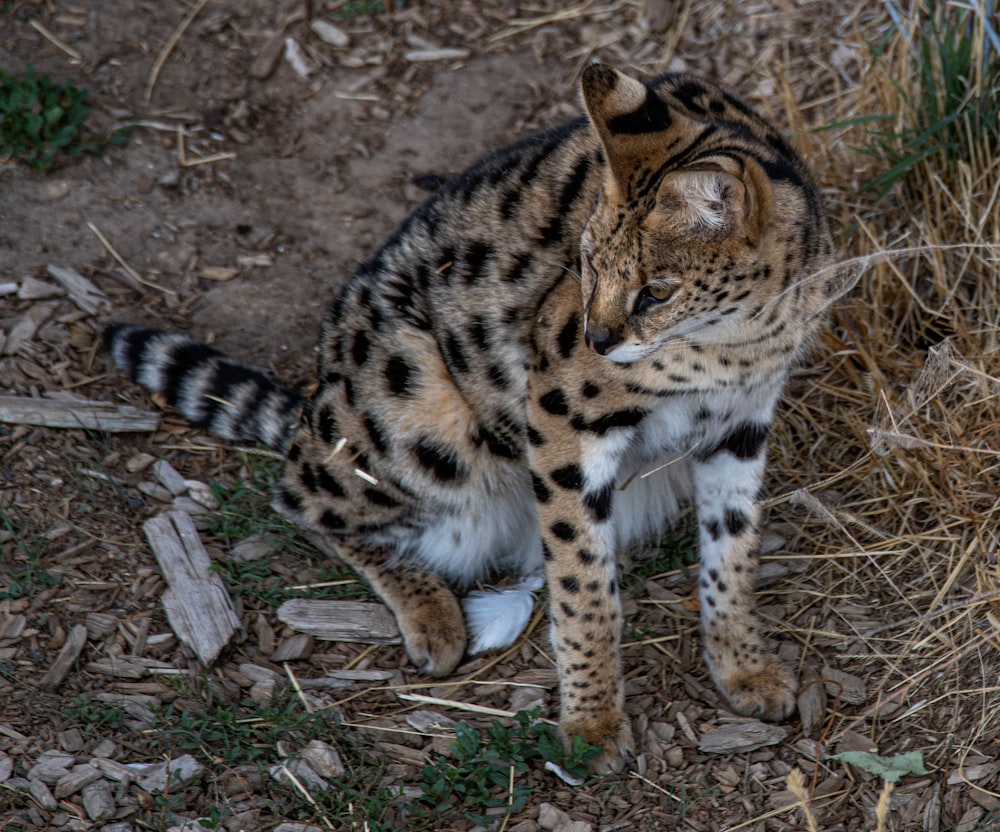

Several cat breeds are defined by the morphological variation of the tail. The Japanese Bobtail is a breed that has been accepted for registration only within the past 50 years; however, the congenital kinked tail variants defining this breed were documented in the Far East centuries ago, and the cats are considered ‘good luck’ in several Asian cultures.

We have found the people of Sumatra are some of the most friendly, polite, and relaxed we have met. They are proud of their rich heritage and, despite their isolation, are eager to share what they have with the outside world, including their feral cats. Their smiles are infectious, and their hospitality is unmatched.
We have had the privilege of living on the island of Sumatra for seven months. Known as the “secret valley of Sumatra” by the Dutch, was one of the last places in Indonesia to fall to their control, as late as 1903. Local cultures remain very traditional, and tourists are few and far between.
I plan to visit my extraordinary cat Chloe in the next couple of weeks. Who knows what interesting stories her kittens might provide for me, and so the saga of the Sumatran feral cats continues? I wonder if she’ll remember me?
 JungleLifebyKat